
Paris, France — It was one of those wine tastings that was clearly worth the effort of climbing up the steep incline of the Butte Montmartre. The great house of great Côtes du Rhône wines, Vidal-Fleury, came to town with no less than 11 wines from both the northern and southern regions of the Rhône Valley to settle into a memorable tasting and food and wine pairing at one of the most authentic restaurants of Montmartre, La Bonne Franquette. This is down-to earth cuisine along with carefully sourced products savored with the Vidal-Fleury wines that clearly emanate from the good earth of one of France’s great wine producing regions.

Antoine Dupré, the managing director of Vidal-Fleury made the journey to Paris from the estate to offer engaging explanations and admirable advice on serving suggestions, like a rich Roquefort or foie gras with the magical Condrieu white. The house, which offers 20 appellations, is regarded as one of the most prestigious in the Rhône Valley. The house’s objective, explains Mr. Dupré, is « to always go as far as possible in the modernization and the research to obtain excellence in the wines. »
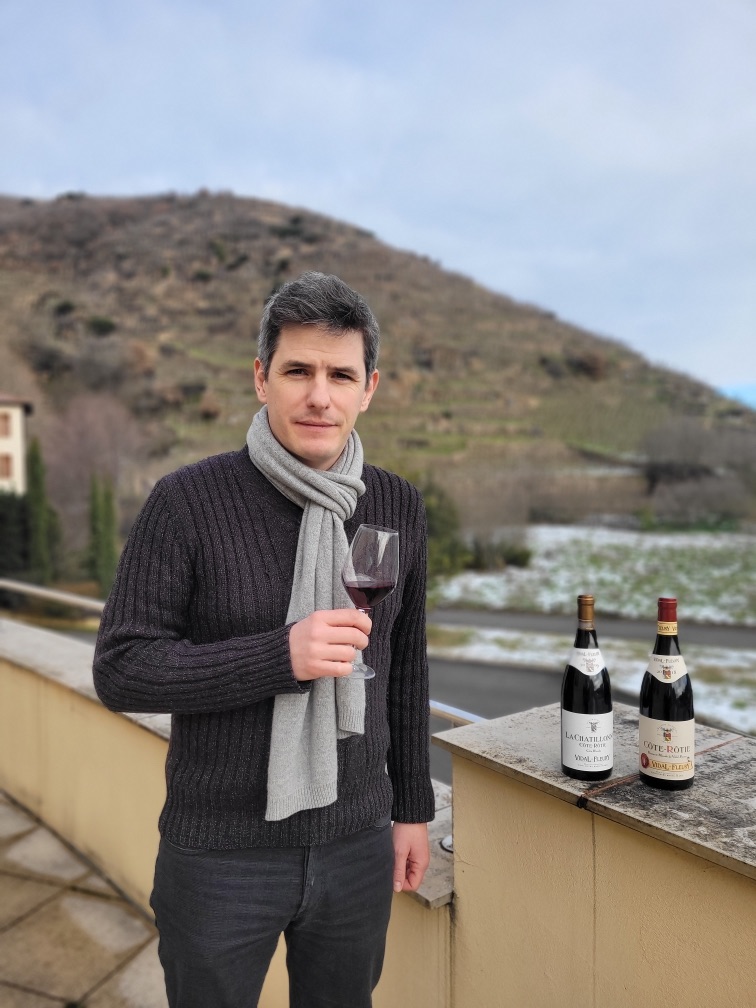
It should be noted that The Gourmet Gazette has always had a predilection for the rich and round wines of this region — the mythical Crozes-Hermitages, the Gigondas and the Châteauneuf du Papes. But the tasting offered a discovery, too, of a marvelous Cornas, a red and a white Saint-Joseph, a tangy and refreshing Saint-Péray 2022 and the superb Condrieu 2021. Vidal-Fleury’s Côte Roties were another remarkable fine wine find and a discovery into this wine’s remarkable property to age well. For Vidal-Fleury is one of the emblematic houses of Côte-Rôtie, one of the great wines produced in the northern Rhône.
A Gourmet Gazette Selection of some of the red wines of the Rhône Valley from Vidal-Fleury. Photos courtesy Vidal-Fleury. Handout via The Gourmet Gazette
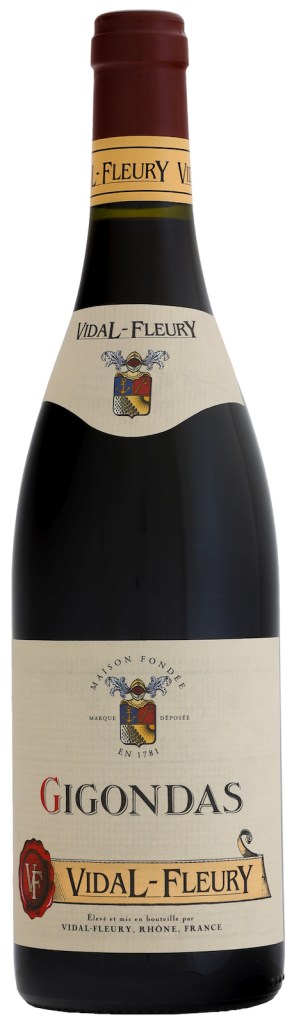
Vidal-Fleury Gigondas. Gigondas is one of the great wines of the southern Côte du Rhône with a deep purple color, strong and aromatic. We tasted Vidal-Fleury’s 2020 version with a blend of Grenache, Syrah and Mourvèdre varieties bursting with notes of violet and pepper. Clearly a good match for game.
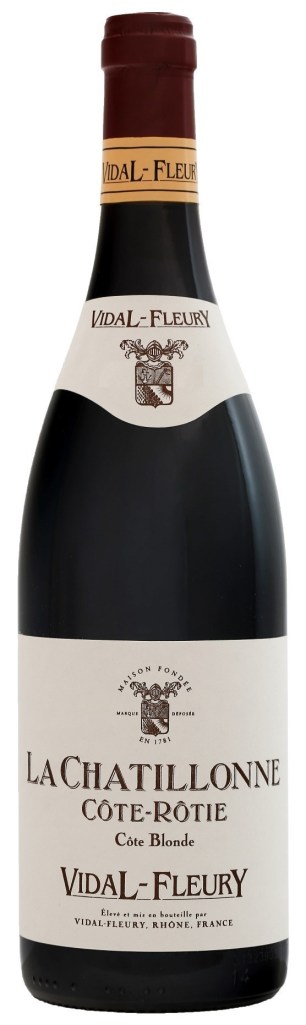
Vidal-Fleury La Chatillone Côte-Rotie Côte Blonde. La Chatillone is the name of the parcel of good earth that the vine plants for this exceptional wine grow in. Blending 88% Syrah with 12% Viognier, we enjoyed the 2017 underscoring that this is a wine that improves with time. The house made only 4,500 bottles of this wine which emanates from one of the oldest vineyards in France. The house has been producing this wonderful wine since 1781. Intense, complex and spicy, perfect for any powerful and pungent dish. At La Bonne Franquette we were treated to the 2006 and 2007 versions for the food and wine pairing. They were perfect with a beautifully done brisket of beef with honey-glazed carrots and a Saint-Nectaire cheese for the cheese course. Both of those bottles are no longer on the market so it was a true treat.
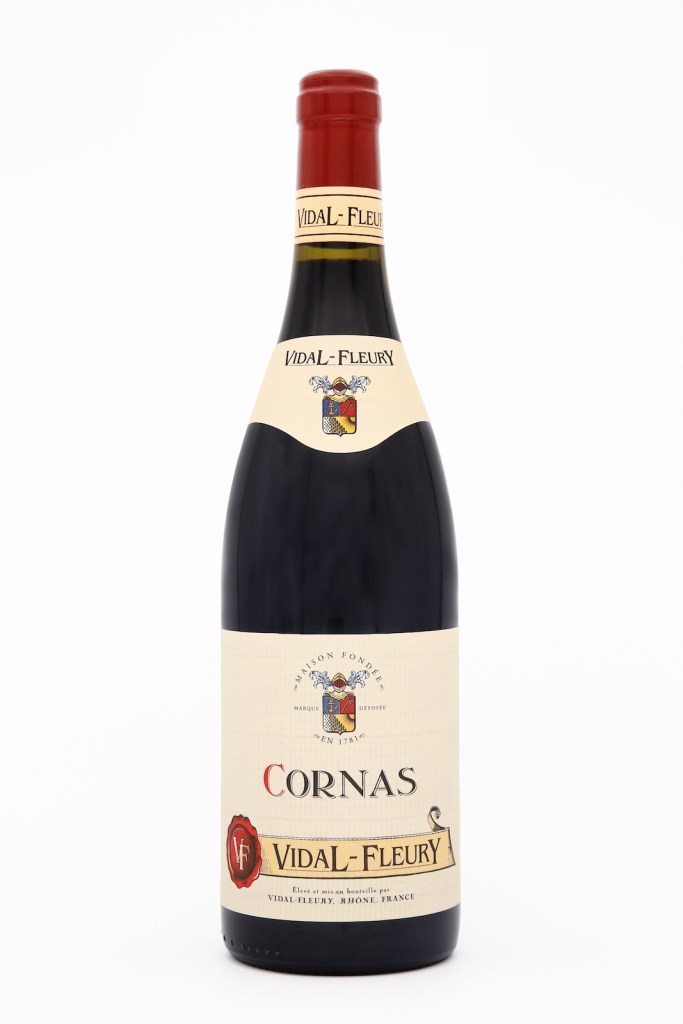
The earthy Vidal-Fleury Cornas. This delightful dry red wine is at its peak anywhere between 10 and 15 years of age. Vidal-Fleury has been producing this wine since the 1920s (it obtained its AOC label of geographical origin in 1938) and has seemingly mastered its production. We enjoyed the house’s 2020 version made solely with the Syrah grape, a marvel perfect with game. The small vineyard of Cornas sits in the northern Rhone and enjoys intense sunshine. Cornas, a Celtic word, means scorched earth. This was one of Charlemagne’s favorite vineyards.
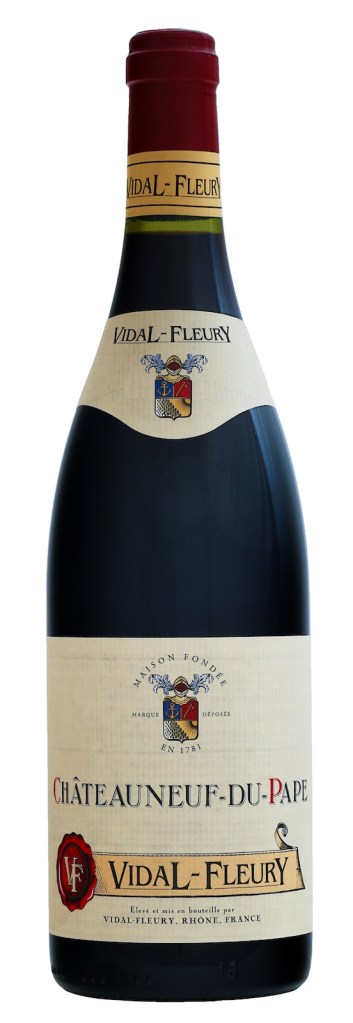
Vidal-Fleury Châteauneuf-du-Pape. This king of wines or should be say pope of wines is one of the great wines of France and that produced by Vidal-Fleury is no exception. I remember tasting it for the first time with my Uncle Al in a French restaurant at home in New York back in the 1980s. At La Bonne Franquette, we tasted Vidal-Fleury’s 2020 version a savant blend of Grenache (dominant at 85%), Syrah and Mourvèdre varieties. This wine enjoys a deep ruby red almost purple color and taste of the good earth: pepper and nutmeg, plum and cherries. Excellent for hearty poultry and beef dishes in thick Paul Bocuse-style sauces. Châteauneuf-du-Pape enjoys one of the oldest AOCs, the controlled origin labels, and the rules for making this wine are extremely strict. The vineyard, on the left bank of the Rhône in the southern reaches of the Rhône Valley, is strewn with round stones that soak up the heat of the sun, enabling the grapes to mature into richness. This is a wine that can be swept into the cellar for 20 years.
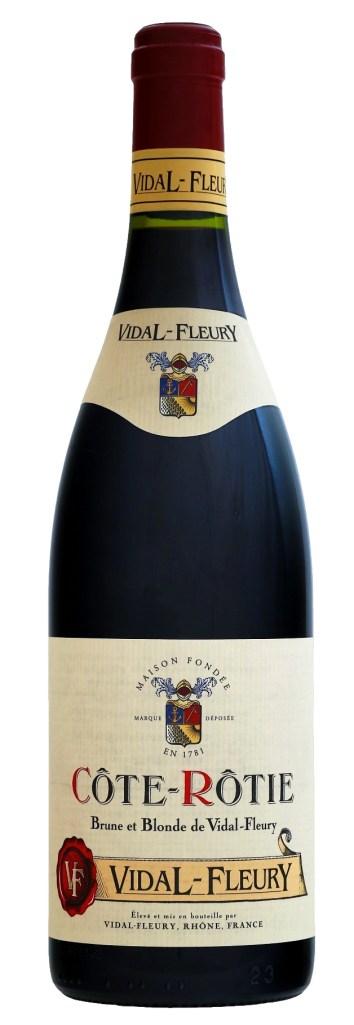
Vidal-Fleury Côte-Rôtie. We enjoyed a luscious Côte-Rôtie Brune & Blonde 2020 made predominately with Syrah and 5% Viognier which brought a certain suave to the wine. Côte-Rôtie brune is full-bodied while the blonde is more delicate. This wine had aspects of both. This is one of the oldest vineyards in France. The vineyard in the northernmost reaches of the Rhône Valley is divided into two subdivisions, the Côte Brune and the Côte Blonde. Local legend says they are named after the two daughters of a local landowner, one had blond hair and the other was a brunette. This robust wine is perfect with grilled beef, game or pungent cheeses. Vidal-Fleury has been making this wine since 1781.
A Gourmet Gazette Selection and detailed explanations of some of the white wines of the Rhône Valley from Vidal-Fleury. Photos courtesy Vidal-Fleury. Handout via The Gourmet Gazette
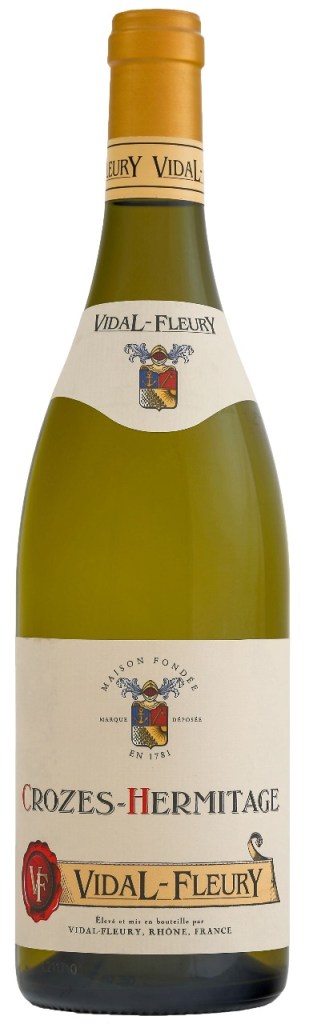
Vidal-Fleury Crozes-Hermitage. We tasted the 2021 vintage made predominately from Marsanne grapes with 5% of the Roussanne variety. This proved to be a refreshing yet richly dry wine, best enjoyed between three and five years of age and would be nice to try with raw oysters.

Vidal-Fleury Saint-Péray. The house introduced this delicious white wine into its range of wines from the right bank of the northern Côte du Rhone in 2021. The house’s Saint-Péray is made entirely from Marsanne grapes although it can be elaborated with Roussane grapes as well. Both grape varieties are excellent in preventing gout and arthritis. We sampled Vidal-Fleury’s Saint-Péray 2022 with a refreshing quality complemented by a refined bouquet and a brilliant yellow gold color. A perfect aperitif wine, it also goes nicely with poultry served chilled and with a spicy mayonnaise or local goat cheeses.

Vidal-Fleury. Saint-Joseph white. This white wine from the granite-laden hillsides on the Right Bank of the northern Côte de Rhône is best when savored at a young age and it is not recommended to keep a white Saint-Joseph for more than 4 years. We enjoyed a 2022 made mainly with Marsanne (70%) and Rousanne (30%), offering up a light, yet rich, and flowery bouquet, it goes nicely with fish in a Nantua sauce or a pork and pepper stew.
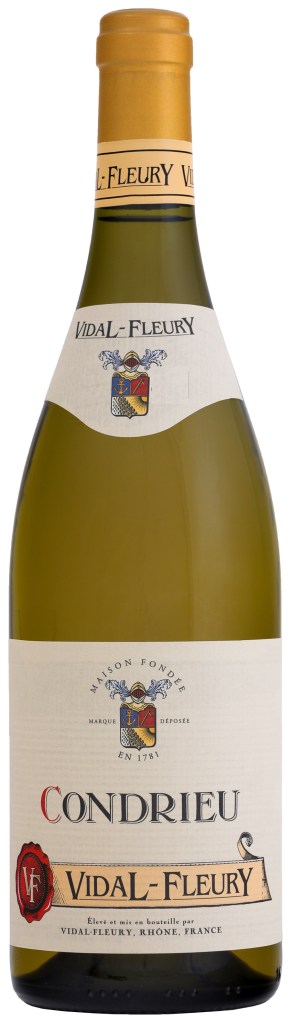
Vidal-Fleury Condrieu. Condrieu is one of the great white wines of France. Made entirely from the Viognier grape variety which gives it its spicy note. This is an earthy wine from the northern reaches of the Rhône Valley with a nice flowery bouquet. Vidal-Fleury’s Condrieu is textbook. We enjoyed a Condrieu 2021, which clearly could be paired with Roquefort and blue-veined cheeses as well as a foie gras. We dipped into this at La Bonne Franquette with the first course: chunky blue cheese and walnut salad over mixed seasonal greens (without the oil and vinegar sauce, a major no, no with wine).
Meanwhile Vidal-Fleury is regarded as the oldest wine maker still in activity in the northern Rhône Valley. Vidal-Fleury was founded in 1781 by Joseph Vidal and quickly earned a reputation abroad. These wines have found their leading export market, the United States, with its first contact being with the American statesman and third president of the United States, Thomas Jefferson back in 1787 when he was the ambassador of the United States to France. After the phylloxera epidemic in the 19th century the vineyard, like many throughout the world, was replanted with American rootstock. The house undertakes every stage in the wine-making process from harvesting its own vineyards to the vinification, aging, bottling and cellaring or aging in the bottle. The house became the property of the Guigal family in 1984 which had already had a historic association with the Vidal-Fleury family. The house has been under the direction of Antoine Dupré since January of 2021. Vidal-Fleury incorporates all of the major regional grape varieties into the host of wines it makes ranging from the Syrah to the Viognier, Marsanne and Roussane and more. ©Trish Valicenti for The Gourmet Gazette. 48 route de Lyon, 69420 Tupin et Semons, France, +33 (0)4 74 56 10 18. https://www.vidal-fleury.com/
Discover more from The Gourmet Gazette
Subscribe to get the latest posts sent to your email.
Categories: Everything Gourmet, Gourmet Fare
 The Gourmet Gazette