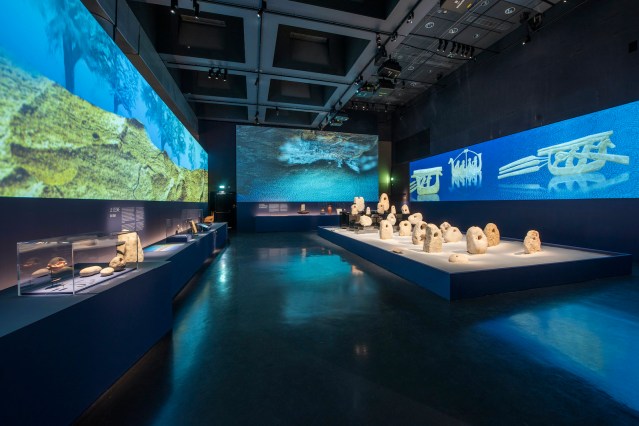
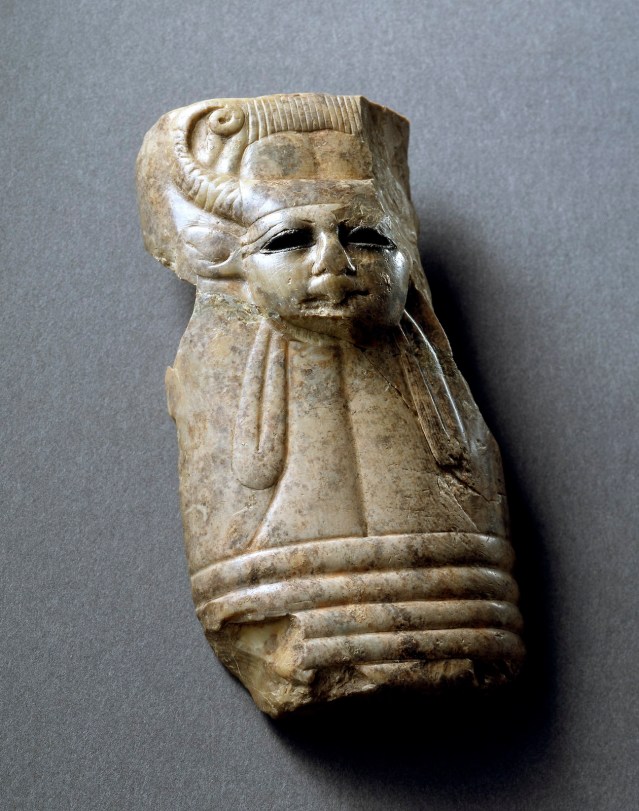
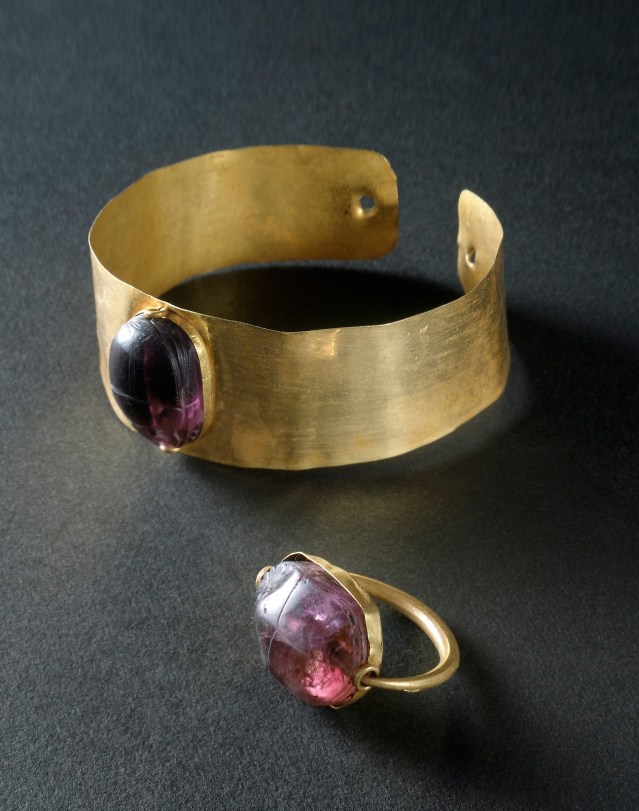
Paris, France — Elaborate jewelry, superbly crafted rings of gold and amethyst. Fine figurines. It was one of the first great civilizations, regarded as one of, if not the oldest port in the world —founded 8,900 years ago by Neolithic fishermen, one of the world’s oldest continually inhabited cities (some 9,000 years and counting), and according to Philo of Byblos “the oldest city in the world”. By 3200 B.C. Byblos had become one of the leading ports in the Mediterranean and would remain so for more than 2,000 years. Cedar left the port on its way to Egypt where its wood was sought after in Antiquity by the pharaohs to construct the pyramids and to use its resin for mummification. Papyrus would come into Byblos — the only place from which is was traded — from Egypt and the Phoenician alphabet was born in this cosmopolitan port city. Byblos, friend to the pharaohs, was designated a UNESCO World Heritage site in 1984. A city which seems to have everything, sea, sun, a spring of source water and a secretive subsoil where riches are still being revealed.
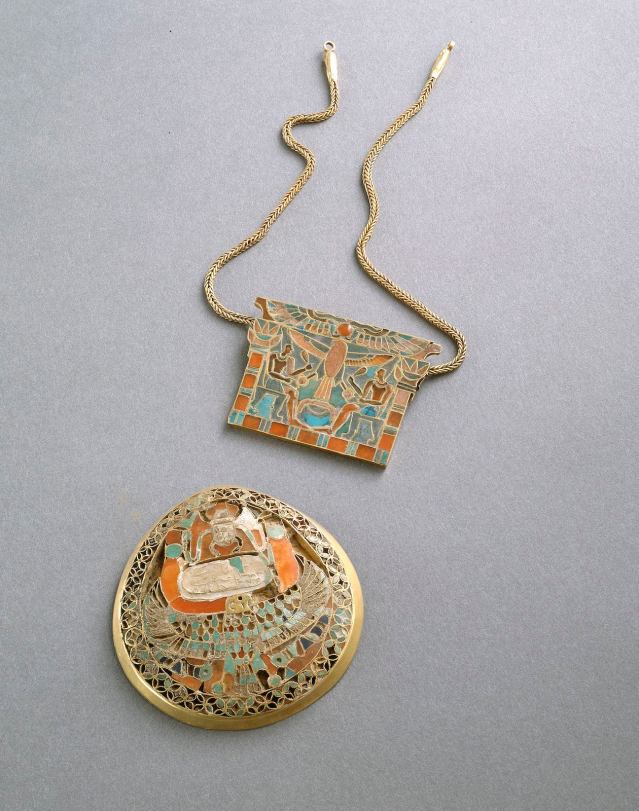
The fragrant cedars form the backdrop of the Byblos promontory jutting out into the Mediterranean and it is endowed with a crucial element, a source of water, a sacred source around which the temples were built. The most remarkable is the Temple to the Lady of Byblos, for here they worshipped a woman deity Balaat Gebal, the Lady of Byblos. The Temple of the Obelisks, was, too, a sacred shrine of worship circa 3000 B.C. when the royal city of Byblos was founded in the Bronze Age. Great riches were found in the temples and burial tombs of the kings, the richest being those of Abi-Shemou and Yapi-Shemou-Abi, rulers of the city-state of Byblos which was at the time called Gubla. Excavations of ancient Byblos were undertaken in the 19th century by the French historian Ernest Renan and continue to this day.
It is the objects found during these excavations that form the core of an exhibition currently underway in Paris at IMA the Institut du Monde Arabe (The Arab World Institute) in an extraordinary show entitled Byblos: Lebanon’s Millennial City. It spans nearly 11,000 square feet (1,000 square meters ) and features over 400 artifacts that detail the 9,000-year history of one of the world’s oldest continuously inhabited cities. The focus is on the Middle Bronze Age (2100-1600 BC) which saw increased urbanization expanding trade networks and a proliferation of cultural interactions, particularly in the port city that is Byblos, the first international seaport which in ancient times linked the coast of Lebanon to Egypt Mesopotamia, the Aegean and probably beyond. And it played a leading role in the spread of the Phoenician alphabet.
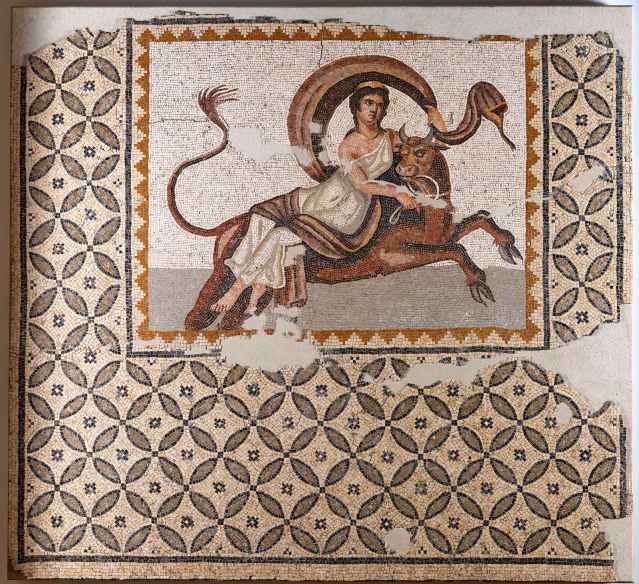
The Phoenician alphabet is regarded as having been developed at Byblos and the site has yielded almost all of the known early Phoenician inscriptions, most of them dating from the 10th century B.C. The name Byblos is Greek in origin as papyrus received its early Greek name — byblos, which was exported to the Aegean through Byblos. Hence the English word Bible is derived from byblos as the papyrus book. But Byblos wasn’t always called Byblos. Its original name was Gubla and its present-day inhabitants call their city Jbeil. Byblos from he Greek came into use in the 4th century B.C. No matter its name, it remains an eternal city. And so many mysteries remain with excavations unearthing even more exceptional finds notably in the necropoles of the city’s elite classes.
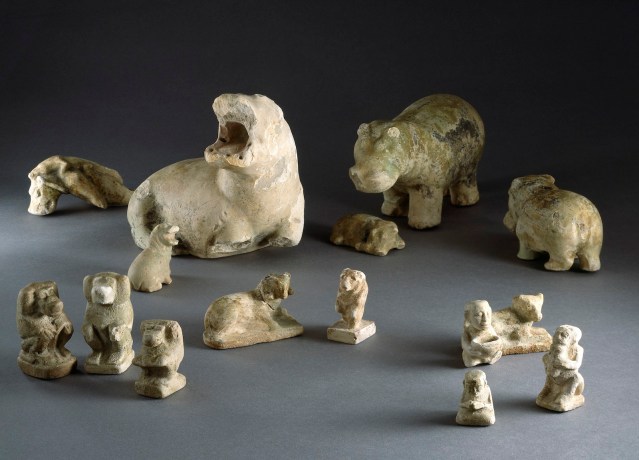
The Byblos show is on until August 23rd. While the epicenter of the show is largely on the city in the Bronze Age, visitors can also have a look at the city’s Phoenician, ancient Greek and Roman periods. Meanwhile the Arab World Institute offers excellent permanent collections, films, performances and conferences, a tea salon and a fine dining experience at its top floor Dar Mina restaurant with exceptional views of Paris and which is serving a special Byblos menu. ©Trish Valicenti for The Gourmet Gazette https://www.imarabe.org/fr
Discover more from The Gourmet Gazette
Subscribe to get the latest posts sent to your email.
Categories: Gourmet Fair, Gourmet Wear

