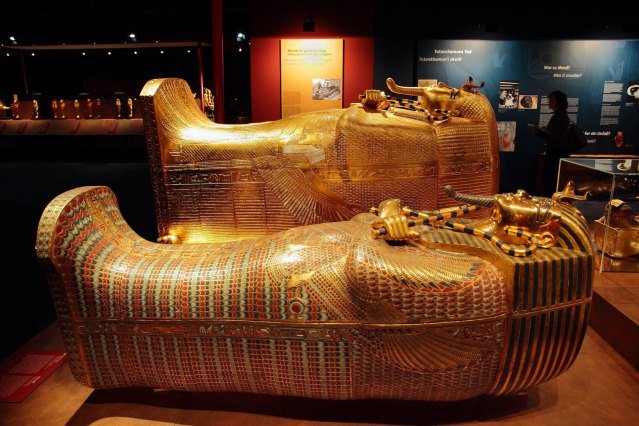
Paris, France — It was one of those intense, great finds in the history of archeology. The British archaeologist Howard Carter with the backing of his benefactor Lord Carnarvon discovered the tomb of the ancient Egyptian pharaoh Tutankhamen in 1922. The boy king came to the throne in Ancient Egypt in 1336 BC and ruled for a fleeting ten years before dying at the age of 18. His luxury-filled tomb provided the backdrop for one of the most extraordinary archaeological adventures of the 20th century. As parts of the world gear up for a total eclipse of the sun, we take you into the world of this ancient civilisation whose people worshipped the sun and whose pharaoh acted as the deputy of the Sun God, Ra on earth.
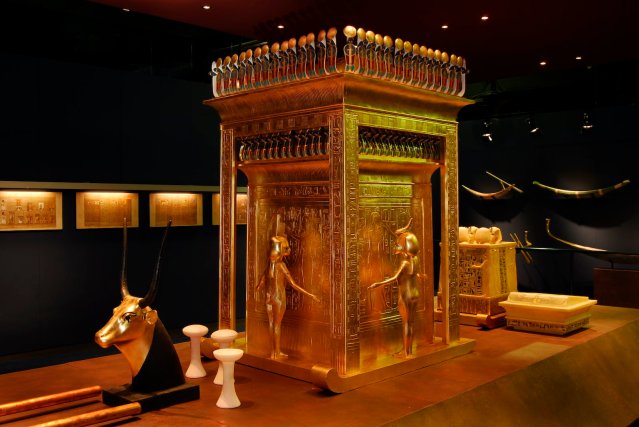
Through carefully documented reproductions and a spectacular reconstruction Tut and his treasures continue to fascinate, currently in Paris at Paris Expo-Porte de Versailles where the exhibition Tutankhamen: His Tomb and His Treasures offers visitors a glimpse into the celebrated pharaoh’s tomb as well as his life and times. The show was created under the supervision of Egyptologists and brings together reconstructions of some 1,000 objects. The exhibition also recounts the story of the tomb’s discovery, retracing Howard Carter’s journey and recreates the different burial chambers with their original dimensions, sequence, and density, allowing visitors to understand how the objects were arranged at the moment of discovery. The works on display are precise and detailed reproductions made by specialized craftsmen based on archival material, sketches, notes, and historical photographs, particularly those produced during the excavation of the tomb, as well as on the study of the objects currently preserved at the Cairo Museum.
“The exhibition gives a wide audience the opportunity to imagine what the life and death of the young king were like, and the magnificence of his funerary equipment,” commented Florence Maruéjol, the spokesperson for the exhibition in Paris who holds a PhD in Egyptology.
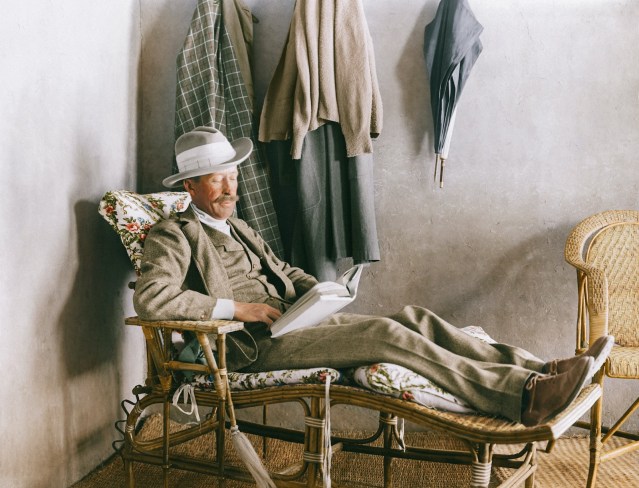
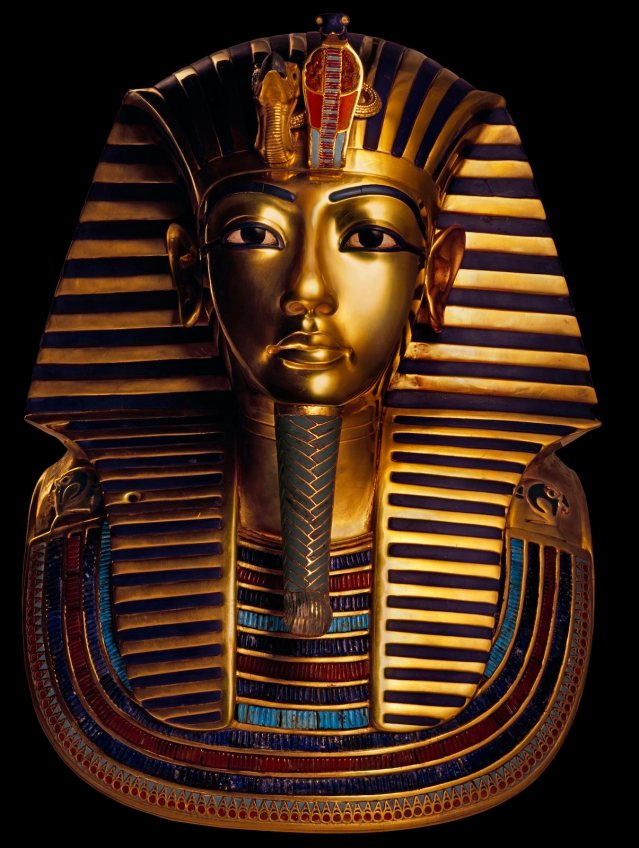
Howard Carter, the British archaeologist and Egyptologist who discovered the largely intact tomb of the ancient Egyptian pharaoh Tutankhamen —aka King Tut — in 1922 found the tomb of four chambers, overflowing with spectacular objects like gold-covered chariots, inlaid furniture, jewelry, a series of shrines and coffins to protect the king and the famous solid-gold mask that adorned his mummy, probably one of the most iconic examples of ancient Egypt to ever emerge into our world.
It took Howard Carter ten years to remove from the tomb all the objects that made up Tutankhamun’s funerary furnishings. The mummy, adorned with luxurious jewelry and ornaments and wearing the famous solid-gold mask, an absolute masterpiece of Egyptian art, lay at the bottom of a series of sarcophagi protected by four monumental gilded shrines. Inside his small tomb, the king’s mummy was ensconced within a nest of three coffins, the innermost of solid gold. The now world famous magnificent golden portrait mask adorned his head. The other rooms were bursting with furniture, statuary, cloths, chariots (Tut reportedly loved to drive chariots), weapons and numerous other objects.
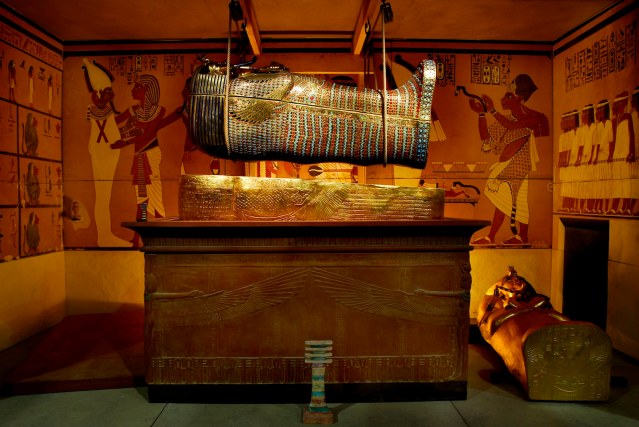
Amidst this elaborate luxury were everyday objects and details of his existence like abundant stores of the pharaoh’s underwear and four sets of the ancient board game of senet which he loved to play as a boy and a young man. The ancient Egyptians loved life and so took as much of it as they could to eternity with them. Tutankhamen is one of the best known of the rulers of ancient Egypt possibly because of the highly popular “Treasures of Tutankhamun” exhibit that traveled the world in the 1960s and ’70s. These objects are preserved at the Cairo Museum.
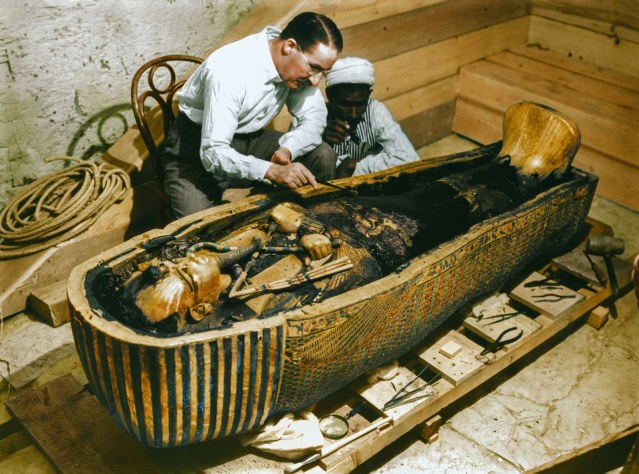
The exhibition is on in Paris until September 6th and in addition to the show itself there is a virtual reality experience into Ancient Egypt and the pharaoh’s daily life before following him into the afterlife, a hallmark of ancient Egypt, one of the most brilliant civilizations in the human adventure. The exhibition is also being played out in Hannover, Germany. Paris Expo Porte de Versailles, Pavilion 5.1, 1 place de la Porte de Versailles,75015, Paris, France
©Trish Valicenti for The Gourmet Gazette
Discover more from The Gourmet Gazette
Subscribe to get the latest posts sent to your email.
Categories: Gourmet Fair, Gourmet Ware

