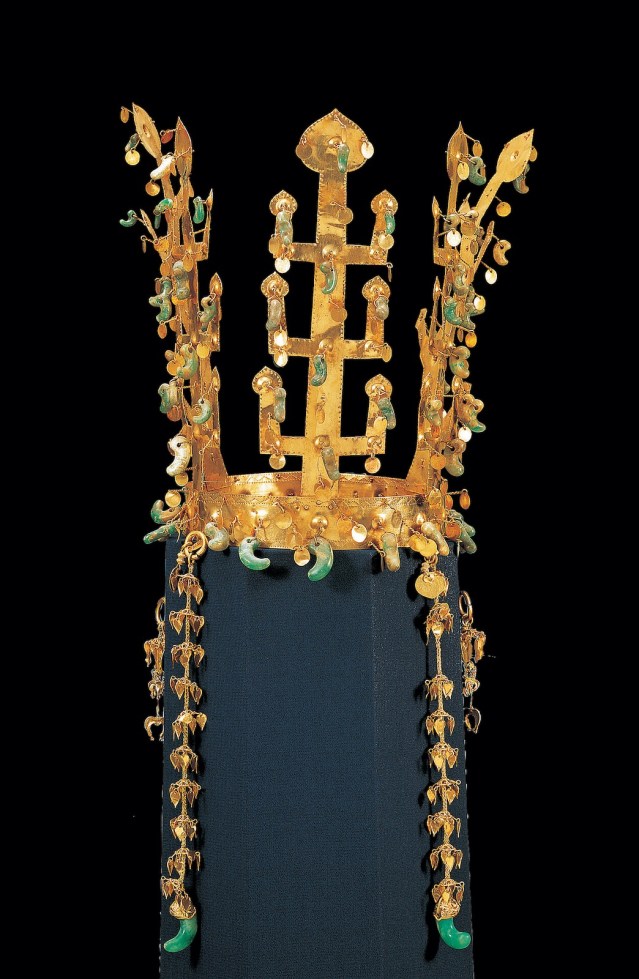
Paris, France — Their lifestyle was lavish and luxurious, filled with gold and power. This was the life and times of the aristocracy of the ancient Korean kingdom of Silla, which thrived more than 2,000 years ago in the southern reaches of the Korean peninsula. The kingdom’s aristocracy was endowed with various privileges, and they held all of the important official posts. The excavations revealing extravagant ornaments, such as gold crowns and gold belts, indicate the lavish luxury in which they lived. Sculpture and the decorative arts showed a tendency toward the abstract and were encouraged by the state, Buddhism flourished, and many temples were erected, the most prominent of which were the Hwangyongsa, Bulguksa, and Seokguram, a grotto shrine.
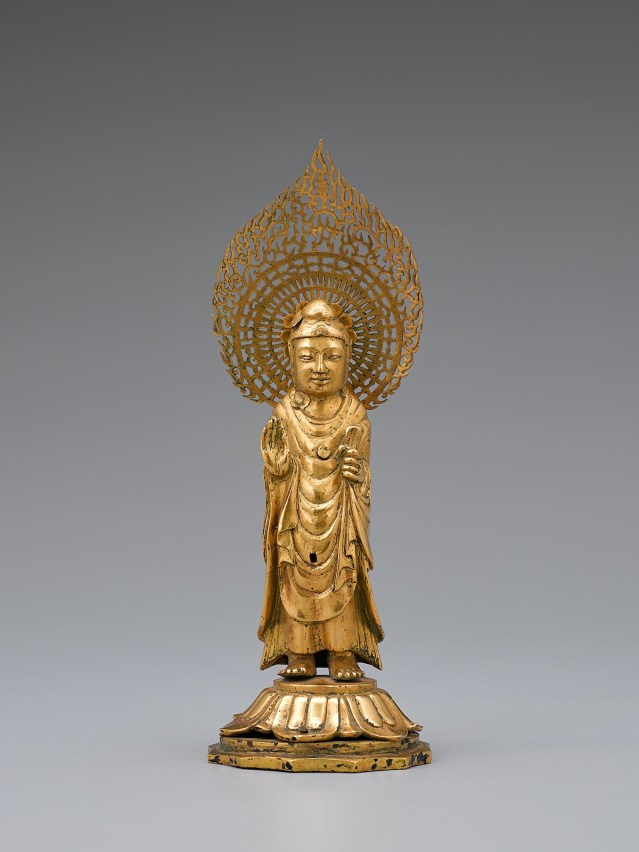
This is the legacy of Silla (57 BCE – 935 CE) defined by its splendour: gleaming gold crowns, burial mounds, Buddhist sanctuaries, and treasures of jade, garnets, gemstones, carefully carved stone and glass. Presented for the first time in France, in partnership with the Gyeongju National Museum, the Guimet — France’s national museum of Asian Arts — brings together a major group of masterpieces, including numerous national treasures, revealing the richness of a kingdom that left a lasting mark on the history of the peninsula. The exhibition, entitled Silla: Gold and the Sacred, Royal Treasures of Korea, 57 B.C. – 935 AD, offers a fascinating foray into the cultural heritage of this fascinating country.
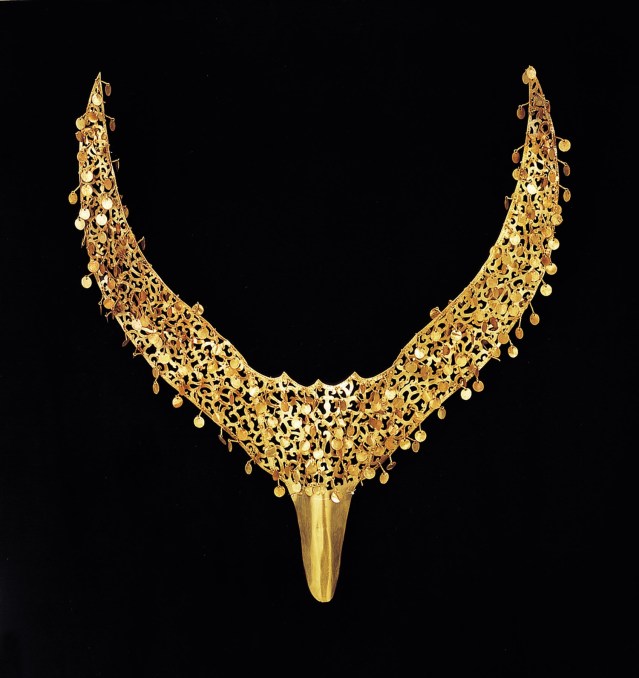
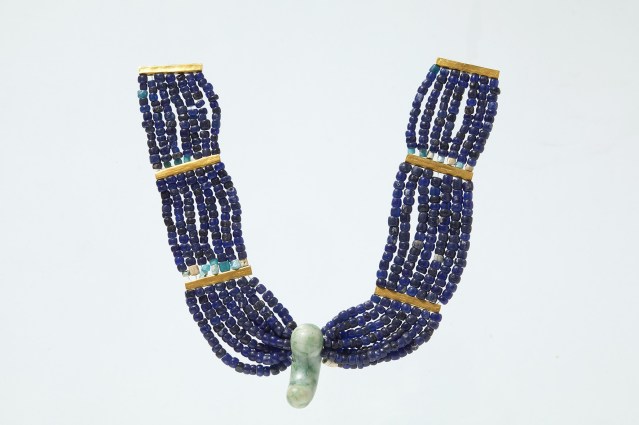
There had been written word of this seemingly magical kingdom, a kingdom whose existence was confirmed through excavations that began in the early 20th century and continue to this day, so rich is the region. The treasures unearthed from royal tombs, including gold crowns, jade ornaments, finely crafted jewellery and figurative stoneware, attest to remarkable technical skill. They also reflect a kingdom fully engaged in exchange networks linking Japan, China, the steppe, Central Asia, even the Mediterranean world and perhaps beyond.
Between wooded mountains and gently rolling plains, Gyeongju unfolds as one of the most remarkable landscapes in the southeast of the peninsula. Inscribed on the UNESCO World Heritage List in 2000, it was, under the name Geumseong, the political and cultural heart of the Silla kingdom for nearly a millennium. This longevity has shaped an exceptional heritage landscape where royal burial mounds rise above the plain, alongside fortifications, palaces, monasteries and an astronomical observatory.
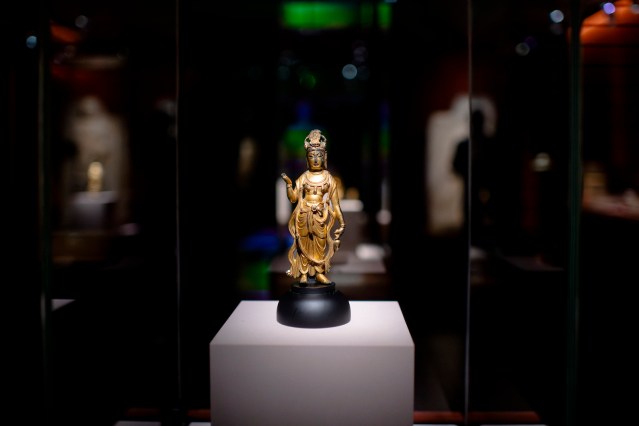
Gyeongju was a major spiritual center as well where shamanism, Taoism, Confucianism and Buddhism all flourished. Its pagodas were renowned as being among the finest in East Asia. At the heart of the city stood the Hwangnyongsa, or « Monastery of the Dragon », a major religious and political complex, whose nine-storey pagoda, completed in the 7th century by an architect from Baekje, was believed to protect the king-dom and legitimize its power. As models of compassionate rule, Silla’s rulers supported temples and monasteries. The ongoing excavations reveal a refined kingdom, hovering between the real, the surreal, myth and legend. Today, the Gyeongju National Museum continues to study and bring to light the major sites that shaped the Silla kingdom.
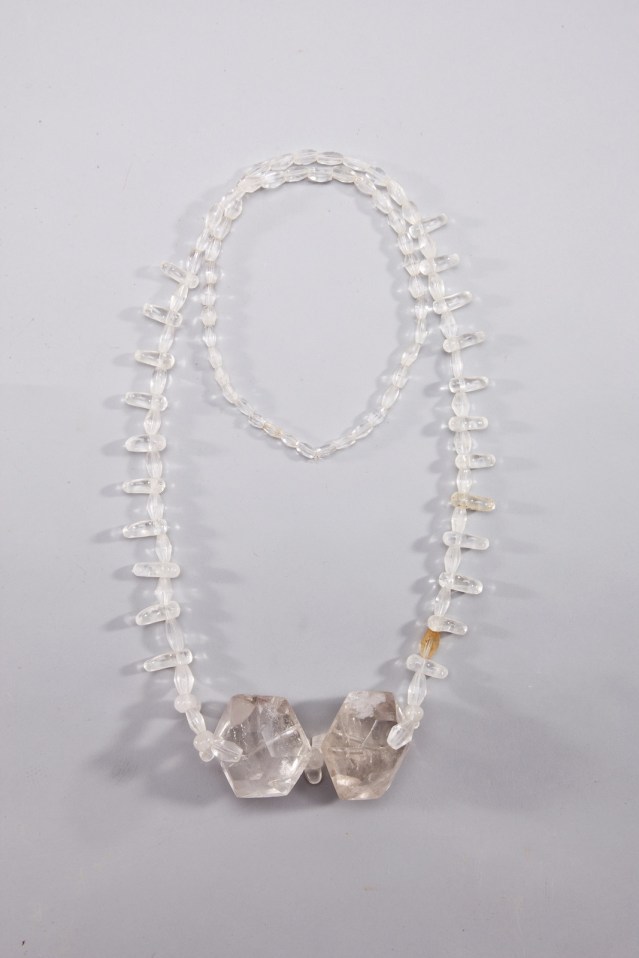
Silla was one of the three kingdoms of ancient Korea and the one that in 668 unified the Korean kingdoms of Silla, Goguryeo, and Baekje into the Unified Silla dynasty. This was a complex society structured by hierarchy and ruled by rituals including human and animal sacrifice. The elaborate burial chambers of the elite contained — among other objects— elaborately colored jewels, ceramics and gemstones.
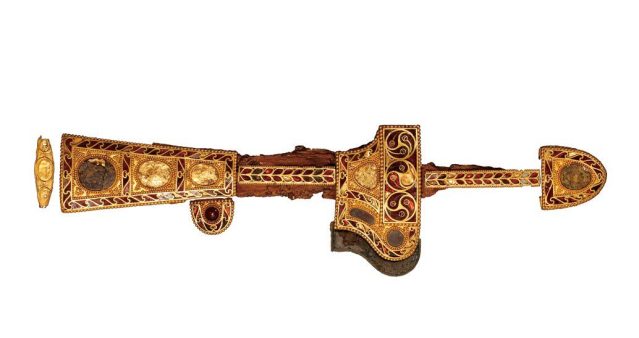
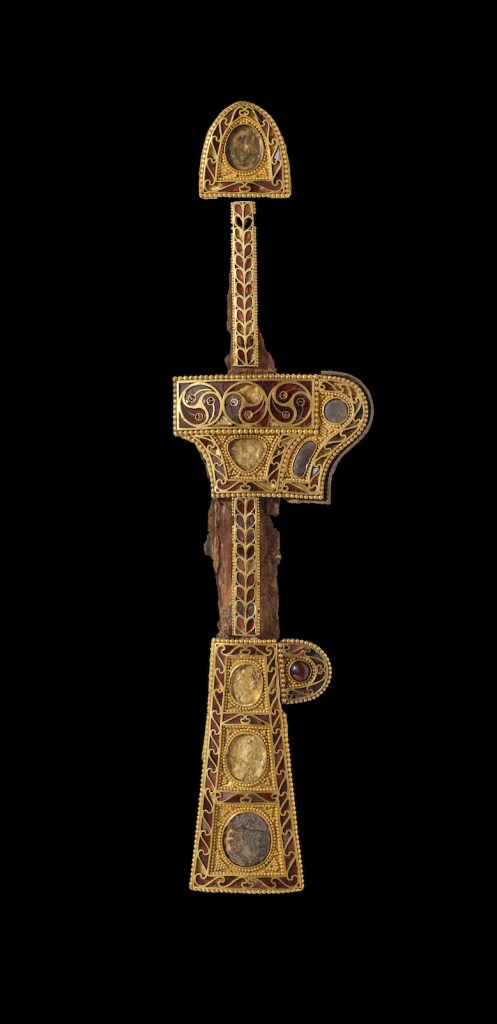
And in the Ancient World the kingdom of Silla was renowned as the land of gold. They had crowns and headdresses of gold, jade and gemstones, daggers, too. One is in gold cloisonné and garnets suggesting trade or contacts with the faraway worlds of central Asia or Persia of the Sassanians. Gold, seemingly was everywhere, in the royal crowns, daggers and jewels, in the royal tombs, in the Buddhist temples. The use of gold headdresses, as well as their styles, forms part of an artistic tradition that spread from Central Asia to the edges of Mongolia and eastern Siberia. Gold is found widely throughout Southeast Asia although its distribution is irregular.
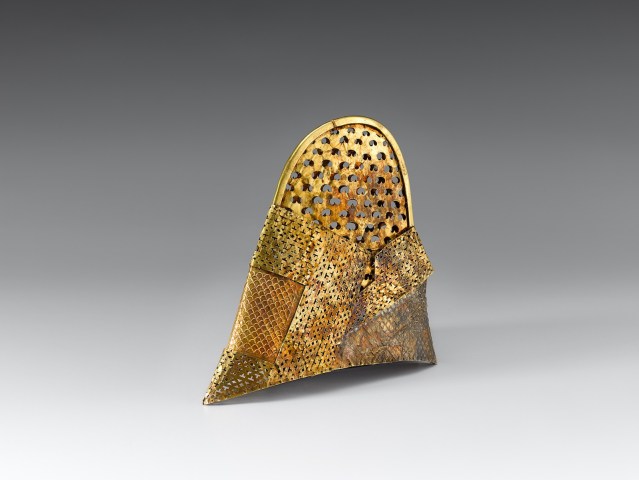
The aristocracy dressed in gold, the colour of the sun, an attire of power. Gold, a radiant symbol of sacred authority, gave rise in Korea to the crowns of Silla, emblematic of aristocratic power and, in particular, of the Kim clan. Worn by the royal couple, their descendants and certain elites, they were accompanied by precious adornments, including belts, earrings, pendants, bracelets and rings, as well as by richly crafted vessels in gold, silver, bronze or stoneware placed in tombs. These crowns became distinctive markers of each kingdom. In Silla, they take the form of the sacred tree, symbolising the link between earth, humankind and natural forces. In Goguryeo, they incorporate bird-feather motifs, while in Baekje they are characterised by floral designs. The Silly exhibition, which was curated by Arnaud Bertrand of the musée Guimet, Yim Jae-wan, of the Gyeongju National Museum, Yoon Seo-gyeong, of the Gyeongju National Museum with the assistance of Garance Cachard, scientific adviser and interpreter, is on until August 31st, but the extensive permanent collections of the Guimet are worth a visit in and of themselves. The Guimet panoramic roof top is open for lunch and tea time daily and in the evenings in July and August on Thursdays, Fridays and Saturdays from 7pm when you can enjoy DJ sets and drinks as well as Korean street food with stunning views onto the Eiffel Tower. The Guimet – National Museum of Asian Arts, France. 6, place d’Iéna 75116 Paris, France. https://www.guimet.fr/en Closed Tuesdays. ©Trish Valicenti for The Gourmet Gazette
Discover more from The Gourmet Gazette
Subscribe to get the latest posts sent to your email.
Categories: Gourmet Fair, Gourmet Wear

