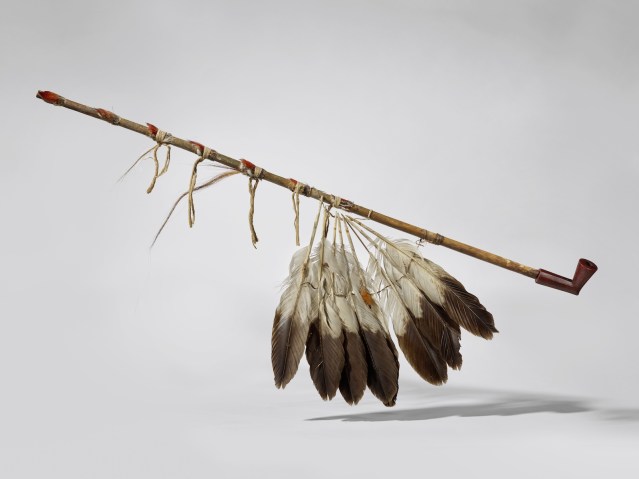
Versailles, France — They crossed the Atlantic arriving in France in November of 1725. The journey on board La Gironde took 12 weeks. Four Native American tribal leaders and the princess daughter of a fifth left the Mississippi Valley and arrived in France on a diplomatic journey with a twofold mission: to renew their allegiance and to demonstrate their loyalty to the French Crown. France had colonized Louisiana and parts of the Mississippi Valley and so the chiefs of the Otoe, Osage, Missouria and Illinois nations as well as the daughter of a chief of the Missouria, sometimes called princess, came to France upon the invitation of the Compagnie des Indes (Company of the Indies) which dealt with trade between Europe and the colonies. They were received with great pomp and curiosity visiting the Comédie-Italien (where two members of the Native American delegation gave an impromptu dance) , the Opéra (which they liked so much they asked if they could come back the next day), the Invalides (where upon seeing the kettles and spits for cooking asked if there were enough warriors to eat all of that food) as well as Versailles, Marly and Fontainebleau where they met with the 15-year-old French monarch and were invited by the king on a hare hunt in the forest of Fontainebleau in which they participated barefoot and with bows and arrows.
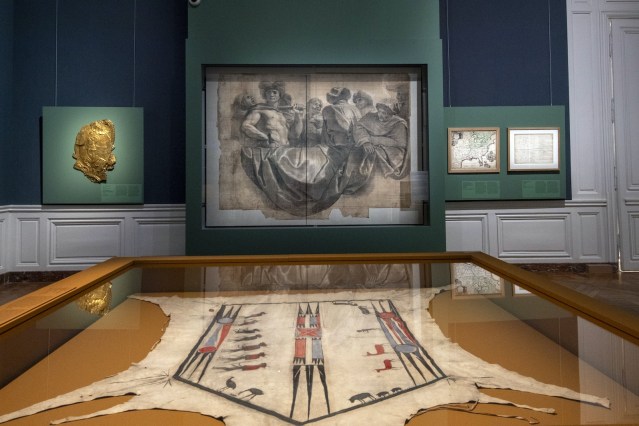
Three hundred years later this meeting and piece of history would emerge in an exhibition being played out at the Chateau de Versailles. The show, entitled 1725, The American Indian Allies at the Court of Louis XV, is a direct result of the combined work and research of France’s musée du quai Branly-Jacques Chirac with several of the Oklahoma nations — the Choctaw, the Miami, the Peoria, the Quapaw, the Osage and the Otoe-Missouria. Research was conducted into the Louisiana collections of the musée du quai Branly-Jacques Chirac revealing objects and art works reflecting the know how, languages, crafts and traditions of the Native Americans dating back to the French colonial period there beginning in the 17th century.
Descendants of the 1725 delegation were on hand for the exhibition opening including members of the scholarly advisory board who like their ancestors before them crossed the Atlantic: Everett Bandy (Quapaw Nation), Elizabeth Ellis (Peoria Tribe of Indians of Oklahoma), George Ironstrack (Miami Tribe of Oklahoma), Marla Redcorn-Miller (Osage Nation), Ryan Spring (Choctaw Nation of Oklahoma), Ian Thompson (Choctaw Nation of Oklahoma), Elsie Whitehorn (Otoe-Missouria Tribe of Indians), and Logan York (Miami Tribe of Oklahoma).
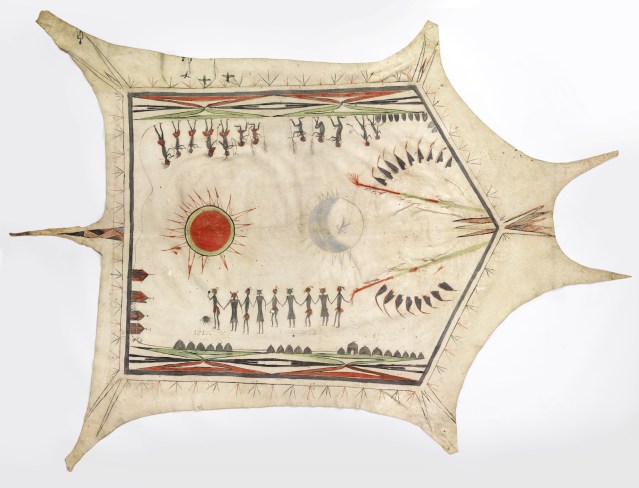
©Musée du quai Branly – Jacques Chirac, photo Claude Germain. Handout via The Gourmet Gazette
« There are arrows here that are older than ones we have. And these are objects that our people gave to them, not objects that were taken from us, » commented Ryan Spring of the Choctaw Nation of Oklahoma, who was touched by the warm welcome they all received at Versailles three centuries later.
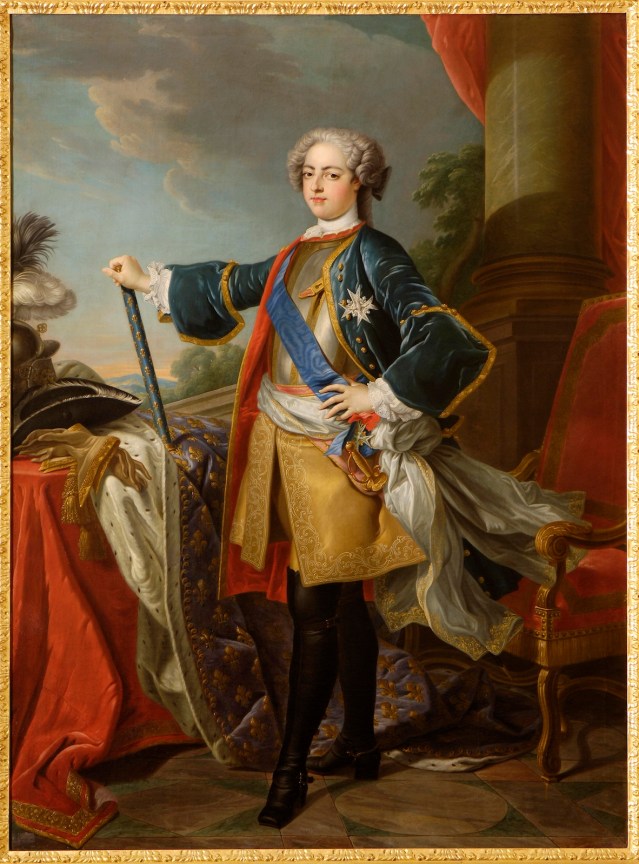
Versailles seemingly remains filled with the spirits of these great Native American chieftans, monarchs in their own right who met with the King of France. But who was King Louis XV who was only 15-years-old when the improbable delegation dedicated to diplomacy came to his court. He was known as « The Beloved » and he was one of France’ s fascinating monarchs. He loved everything that was science and joyfully collected clocks and precision instruments. He was also fond of making his own marzipan and hot chocolate in his private apartments and he introduced cats to the court which had previously been peopled only by horses, dogs and the occasional monkey or bird. His reign of almost 59 years was the second longest in the history of France, exceeded only by his great-grandfather and predecessor Louis XIV whose family, including his heirs, had been devastated by measles and small pox making Louis XV the last direct heir. The exhibition is on until May 3rd and is accompanied by a special edition of Gradhiva, the anthropological and art publication of the musée du quai Branly-Jacques Chirac. https://en.chateauversailles.fr/
See also: https://thegourmetgazette.com/2023/01/22/a-kings-king-louis-xv/
©Trish Valicenti for The Gourmet Gazette
Discover more from The Gourmet Gazette
Subscribe to get the latest posts sent to your email.
Categories: Gourmet Fair

