
Paris, France — He was born in England in 1825, but Charles Frederik Worth is widely recognised as the inventor of a very French specialty, haute couture. He would cross the Channel in 1846 and worked for the luxury house of Gagelin in Paris. Just 12 years later he would establish his own house forming a partnership with the Swede Otto Gustav Bobergh to create Worth & Bobergh, at number 7 Rue de la Paix in 1858. This soon-to-be legendary location also brought Worth closer to the imperial court. Princess von Metternich, wife of the Austrian ambassador to France, soon launched the couturier’s career by wearing his creations. These gowns were highly coveted by the ladies of the court and even by the Empress (Eugénie, the wife of Napoleon III), with whom Worth formed a relationship that outlasted the Empire.
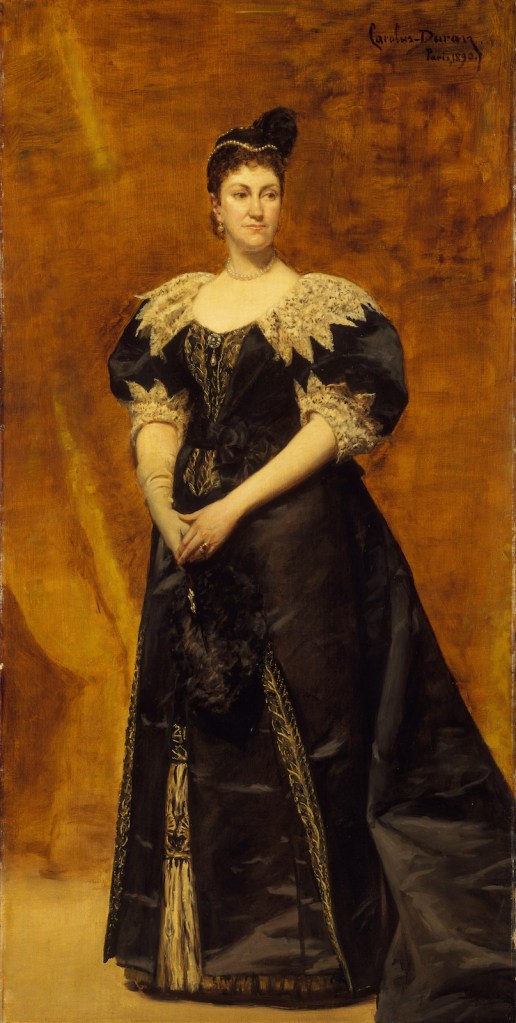
Spanning four generations and nearly a century of existence, Worth holds a special place in the world of fashion houses. Worth is the name of a man, Charles Frederick, and of his descendants who headed the house one after another. His sons Gaston and Jean-Philippe and grandsons Jean-Charles and Jacques, who followed in his footsteps also left their mark on the industry.

Worth is also a legend: that of a house founded in Paris in 1858 whose success laid the modern foundations of the haute couture industry. Charles Frederick Worth redesigned the shape of the crinoline, revitalised the silk houses of Lyons and his love of the embellishments of lace, embroidery, passementerie and braids would increasingly adorn his styles. Charles Frederick Worth’s handwritten signature, which appeared on the label at the end of the 1880s, was a powerful symbol of the reputation of the Parisian house, which no longer needed to indicate its address.

While the house of Worth is probably best known in the United States for its celebrated perfume, Je Reviens, fashionable (and wealthy) Americans wore Worth’s fashions. Among them was Mrs. William Astor, Mrs. Calvin Stewart Brice, a renowned hostess of the Gilded Age and Madeleine Cartwright, an affluent patron of the arts from New Orleans who arrived in Paris in the early 1880s. And Worth’s list of illustrious customers extended to European acrosticrats and the emerging upper classes. Among his most famous clients one finds the Empress Elisabeth of Austria, better known as Sissi. Worth crafted her gown for her coronation as the Queen of Hungary. For the coronations of Alexander III in 1883 and Nicolas II in 1896, the house created the tsarinas’ ensembles, which were displayed at 7 Rue de la Paix before being sent to Russia. Of note, as well, are his creations for the extraordinary and extraordinarily beautiful Countess Greffulhe, a woman of great taste and the model for Marcel Proust’s Duchess of Guermantes. Her wardrobe is conserved in Paris at the Musée Galliera, the city’s fashion museum.

The story of Worth and his house has been the object of one of the most successful exhibitions in Paris this year. Entitled Worth. Inventing Haute Couture, it is drawing to a close on September 7th but which remains in an exceptional exhibition catalogue and in the various museums around the world that lent their Worth fashions, accessories and objects for the show which is being held in the Petit Palais, the fine arts museum of the city of Paris. The show benefited from the exceptional contribution of the Palais Galliera, the city’s fashion museum and features more than 400 works including clothing, accessories, objets d’art, paintings and graphics, forming an immersive fresco that highlights not only the creations of the House of Worth but also the illustrious names associated with the maison. A number of American museums contributed fashions to the show including the Philadelphia Museum of Art, the Metropolitan Museum of Art and the Museum of the City of New York. ©Trish Valicenti for The Gourmet Gazette https://www.petitpalais.paris.fr/en
Discover more from The Gourmet Gazette
Subscribe to get the latest posts sent to your email.
Categories: Gourmet Fair, Gourmet Wear
 The Gourmet Gazette