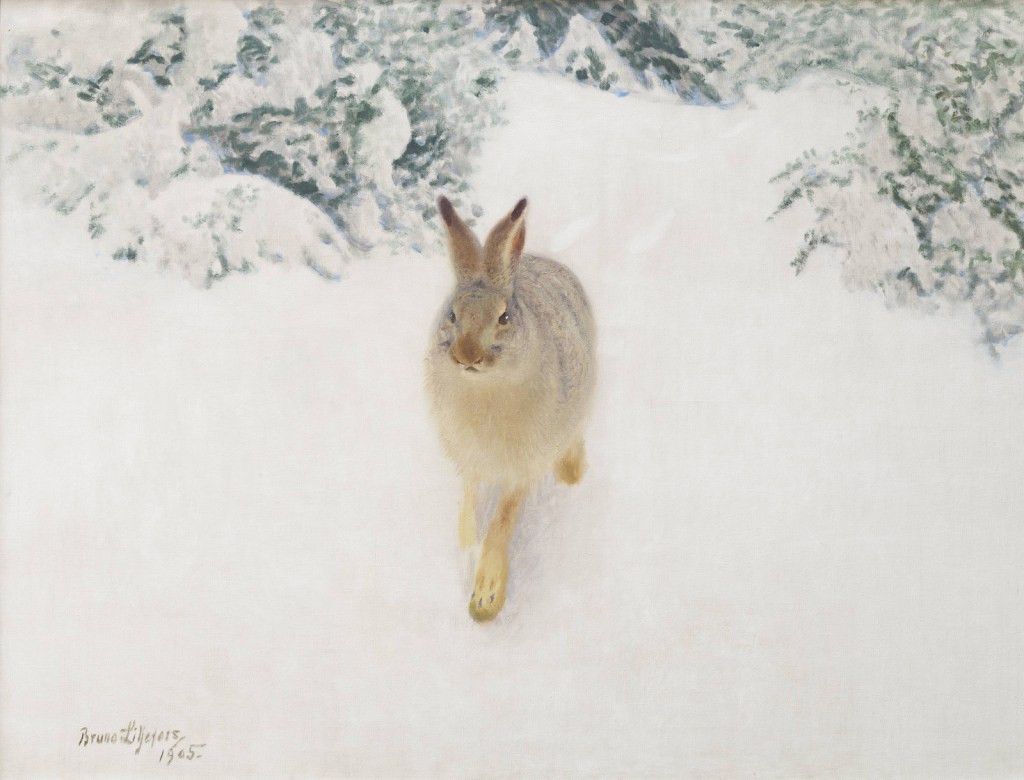
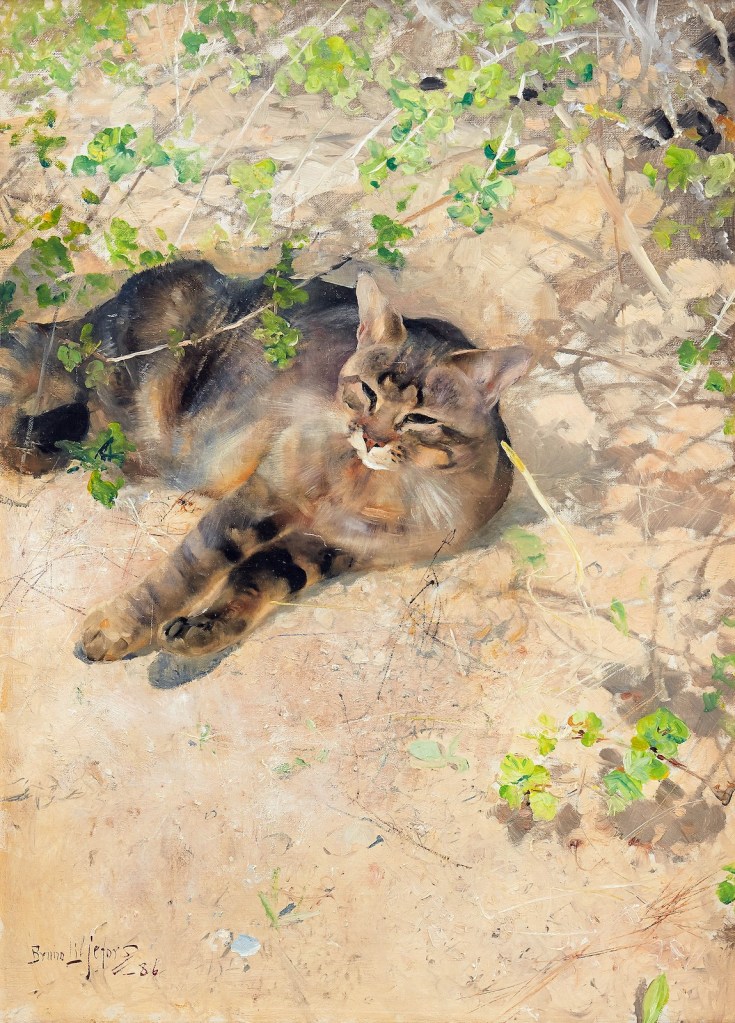
Paris, France — There is Jeppe the cat resting in sand heated by the sun. A white hare in winter leaving his footprints behind him in the snow. A highly detailed portrait of a family of foxes lying in the undergrowth. These are some of the paintings by the Swedish artist Bruno Liljefors. Liljefors grew up in Uppsala, a town north of Stockholm surrounded by vast expanses of wilderness. He would prove to be a gifted painter and he studied first in Sweden at the Royal Academy of painting before visiting Germany, Italy and eventually Paris returning to Sweden where he devoted himself exclusively to the representation of Swedish nature and animals. He was a keen observer of the natural world, using his acrobatic skills to climb trees while also making use of hunting techniques like camouflage and the construction of hideouts. In the 19th century, Darwinian discoveries entered into European cultures. Liljefors created natural worlds peopled with animals, plants, insects and birds and these works remain highly relevant today in a time when species extinction and the preservation of biodiversity has become a major issue.
Le Petit Palais museum in Paris is offering a journey into the vast forests and the abundant natural world of Sweden through an exhibition of Bruno Liljefors works, which are being shown for the first time to the French public. Entitled Bruno Liljefors, Wild Sweden, the show underscores the importance of this painter on the late 19th century Scandinavian arts scene and the unique contribution he made to observing and depicting the natural world. The show features some 100 pieces including paintings, drawings and photographs from the collections of Swedish museums, including the Nationlmusuem of Stockholm who is the partner of the exhibition, the Thiel Gallery, the Gothenburg Museum as well as numerous private collections.

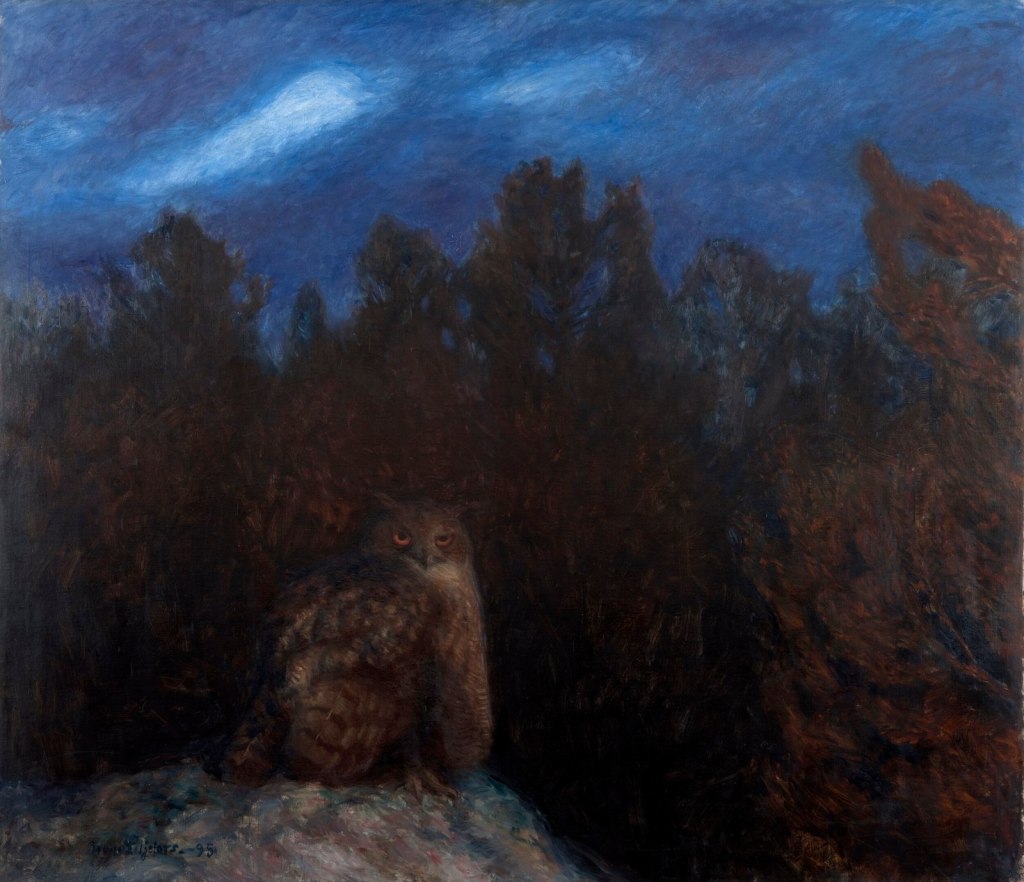
There are the flying snow geese, there are the butterflies that seemingly flutter out of the meadow they are playing in all because of the intense detail that reach out through the canvas to the visitor’s eye reflecting Liljefors’s uncanny ability to observe what he was painting. And then there are the owls, big European Eagle Owls. He even kept one as a pet. The artist was known in his own time as the prince of animal artists. He was interested not only in the animals themselves but, too, the relationship they had with their habitats. His climbing skills enabled him (and us, too) to observe the nests of ospreys at their dizzying heights. He roamed moors, marshes, beaches and foresters with the ease of the hunter that he was.
The exhibition, designed by Cécile Degos, transforms the Petit Palais into a nature walk and in keeping with a commitment to sustainability, the exhibition is built solely with modular and reusable elements reducing its environmental impact. The Bruno Liljefors show is on until February 16th while the permanent collections of the Petit Palais, the Fine Arts Museum of the City of Paris, are worth a visit in and of themselves. https://www.petitpalais.paris.fr/en
©Trish Valicenti for The Gourmet Gazette
Discover more from The Gourmet Gazette
Subscribe to get the latest posts sent to your email.
Categories: Gourmet Fair
 The Gourmet Gazette