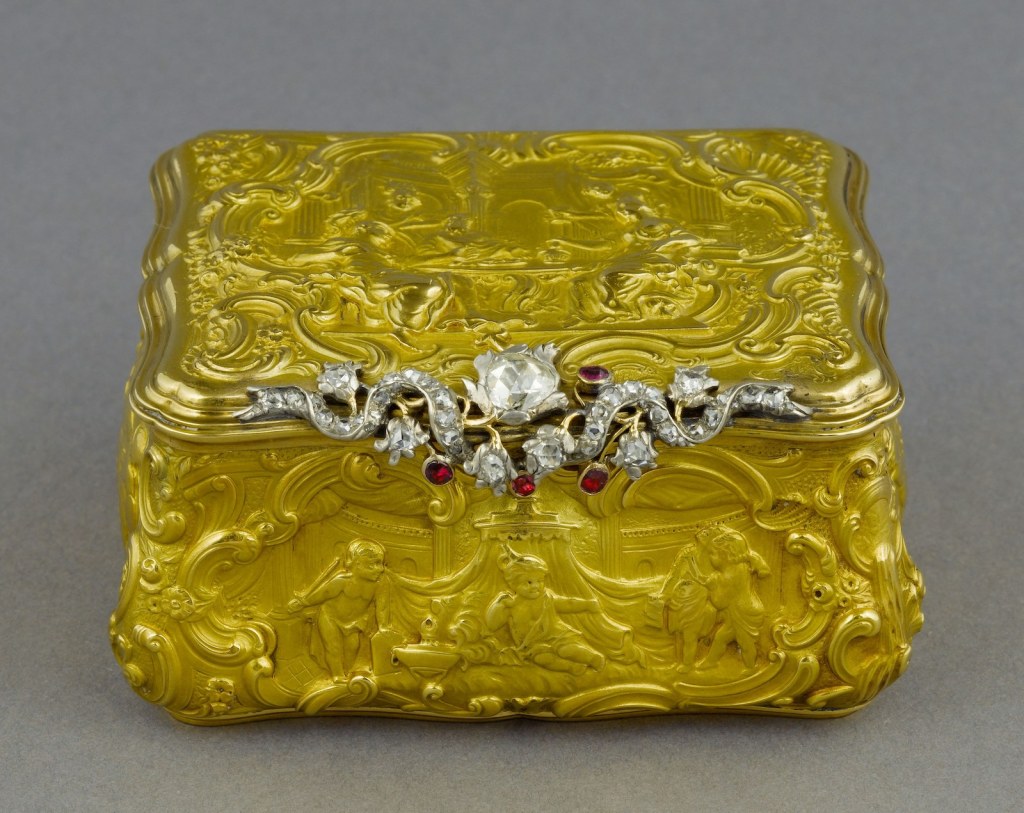
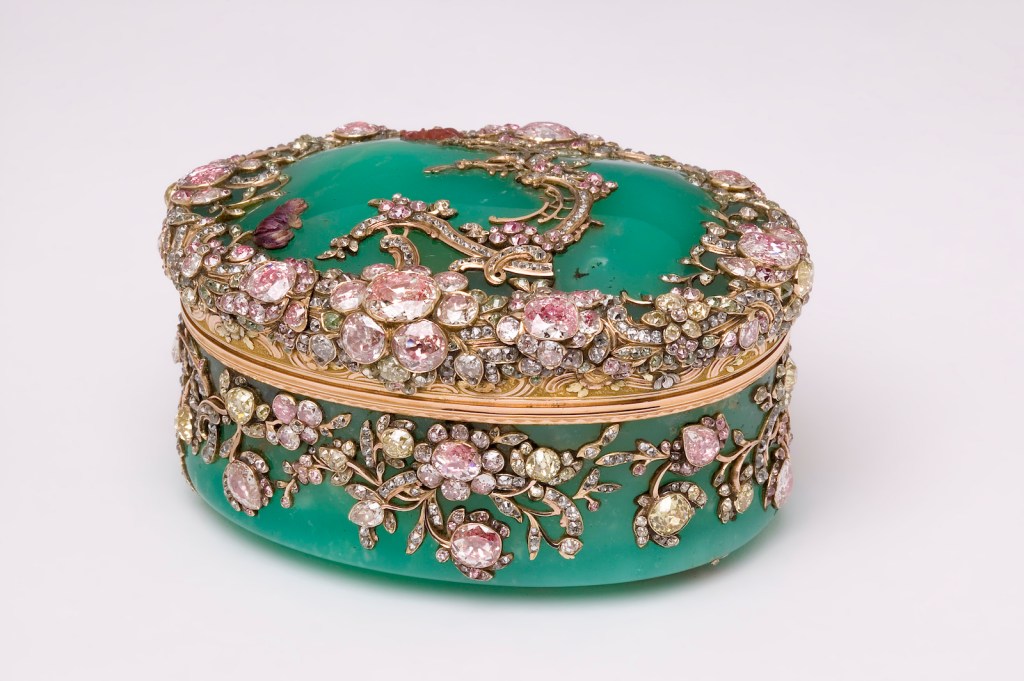
Paris, France — Tiny perfume bottles, tobacco pouches, snuffboxes( carried by women as well as men) and beauty boxes (often holding a beauty mark) with a mirror on the inside lid all could fit neatly and discreetly into an aristocratic pocket back in the 18th century and early 19th century. The precious pocket-sized pieces required a host of craftsmen to fashion them ranging from painters, enamelers, stone cutters, varnishers and goldsmiths. Candy boxes, writing cases, embroidery sets, opera glasses all became luxurious fashion accessories and were often given as gifts and were the object of collections.
Paris Musées / Musée Cognacq-Jay. Handout via The Gourmet Gazette
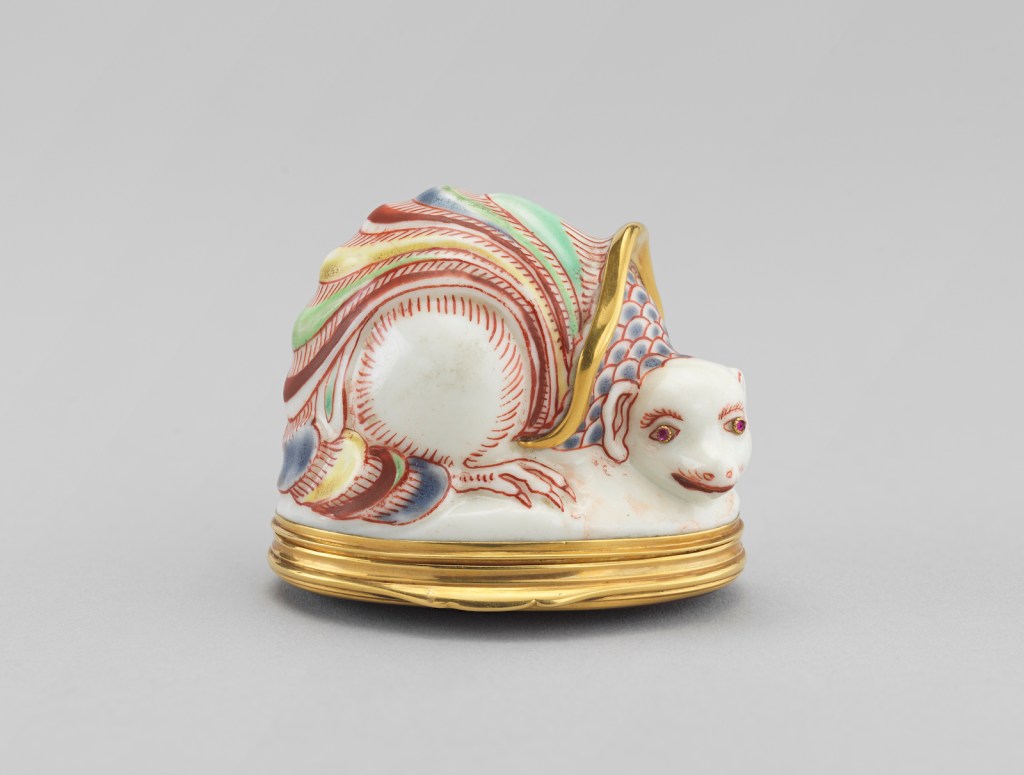
It was the goldsmiths who became the style setters back in the 1700s when they would use a mix of materials to create a piece blending into their gold object porcelain, precious stones, mother-of-pearl, tortoise shell or micro-mosaics. Back in the 18th century the natural sciences were all the rage with mineralogy being at the heart of it all. The goldsmiths would import exotic materials but also in a canny way used less onerous and readily available materials like wood, straw or papier maché thus creating objects for the middle classes who wanted to resemble the aristocracy. Sort of an 18th century take on, well quite frankly, imitations.

The Musée Cognacq-Jay in the Marais neighborhood of Paris is hosting an exhibition devoted to these delightful objets entitled Pocket Luxury. The show presents an exceptional collection of these precious, sophisticated and small objects and underscores the role they played in art history, the history of fashion, the history of techniques and offers a cultural and anthropological analysis of them through a juxtaposition with clothing, furnishings and art works of the time.

The exhibition revolves around the exceptional collection of Marie-Louise Jay and Ernest Cognacq, who acquired some 260 of these precious bejewelled objects and subsequently bequeathed them to the city of Paris. Objects emanating from the collections of the Louvre, Versailles, the British royal family and the Victoria and Albert Museum have been loaned for the show. The last part of the show presents major pieces from the collections of the House of Van Clef & Arpels and the House of Fabergé from the 20th century and which drew their inspiration from 18th century style.
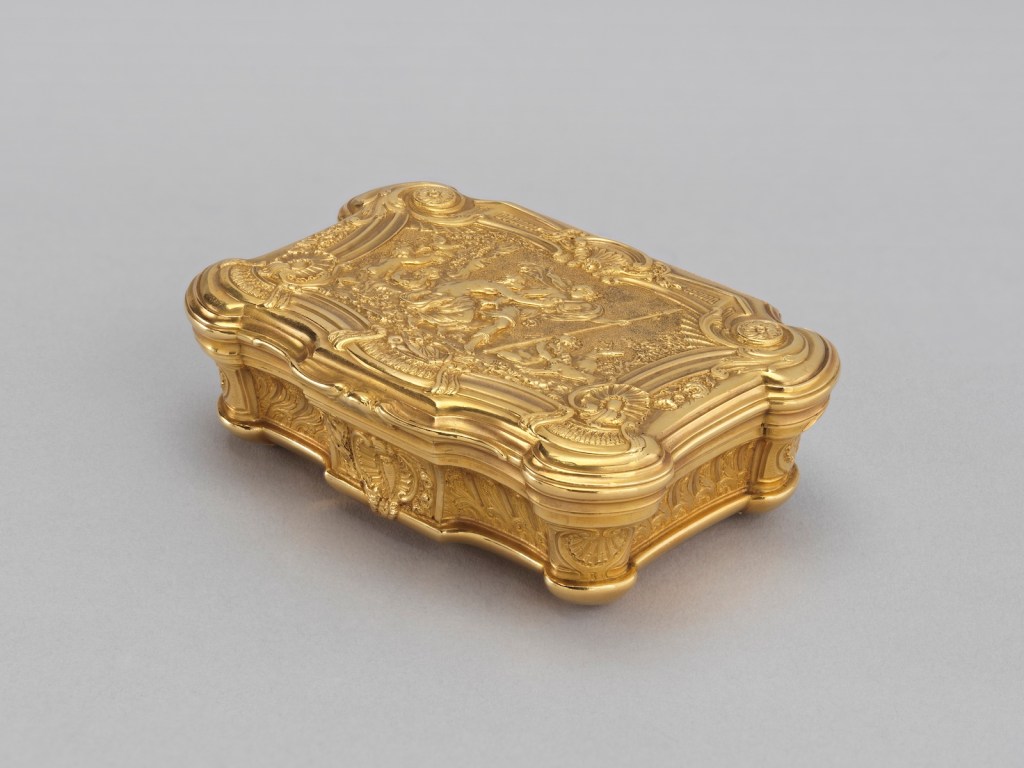
Elaborate and difficult to master techniques were required to fashion this world of pocket-sized luxury including metal chasing, stamping, engraving, embossing, guilloche — when a precise, intricate and repetitive pattern is engraved onto a material. The new fashion trend even incited experimentation by some of the bolder craftsmen of the day. The Martins, a family of varnishers, perfected their own lacquer-making technique using oil and gum resin which handily passed for the lacquers of the Far East which required techniques unknown in the West at the time.
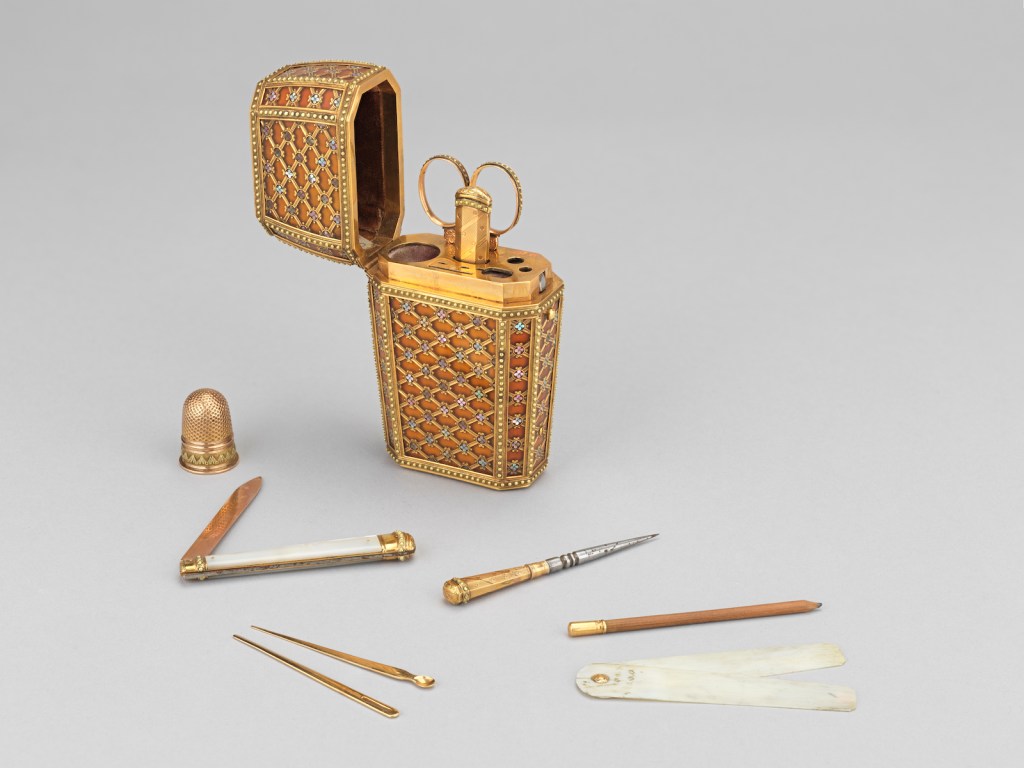
Tortoise shell was imported from Asia and Africa while mother-of-pearl, a fragile and therefore particularly difficult material to work with fascinated with its iridescence and at times sparkling colors. These were the accessoires of monarchs and members of the royal families throughout Europe. Frederick II, the King of Prussia in the 18th century collected nearly 300 of them adorned with countless precious gemstones. And they would accompany their owner throughout the day always in hand or close at hand in the pocket. In conversations in an 18th century salon it was part of the exchange to pull out a snuff box (and to offer a snuff) or a sewing kit, all regarded as refined gestures. The ingenious opera glasses played a double role of being seen and seeing for their owner.
Inaugurated in 1929, the Musée Cognacq-Jay, housed in a delightful manor, houses the collections bequeathed to the city of Paris by Ernest Cognacq who founded the Samaritaine department store. The collection brings together some 1,200 works of paintings, sculptures, porcelain from Saxony, gold and silver pieces and furnishings all evocative of the Age of Enlightenment. Visitors can discover the greatest artists of the 18th century including Boucher, Fragonard, Chardin, Greuze, Tiepolo and Canaletto. The Pocket Luxury exhibition is on until November 24th and the museum in and of itself is worthy of a visit. The visit to the permanent collections is free of charge. 8, rue Elzévir – 75003 Paris Tél. : 01 40 27 07 21 museecognacqjay.paris.fr ©Trish Valicenti for The Gourmet Gazette
Discover more from The Gourmet Gazette
Subscribe to get the latest posts sent to your email.
Categories: Gourmet Fair, Gourmet Ware
 The Gourmet Gazette