Paris, France — L’Ecole, the School of Jewelry Arts, which is supported by the house of Van Cleef & Arpels recently opened up its new headquarters on the Grands Boulevards in Paris in a manor house listed on the national historic monuments register. Built in 1778, the hôtel de Mercy-Argenteau is one of the oldest private mansions on the Grands Boulevards and one of the very few to have been preserved. Its first occupant was a rather influential man of the times: the Count Florimond-Claude de Mercy-Argenteau who as the ambassador of Maria Theresa of Austria would go on to arrange the marriage between the future Louis XVI and Marie Antoinette.
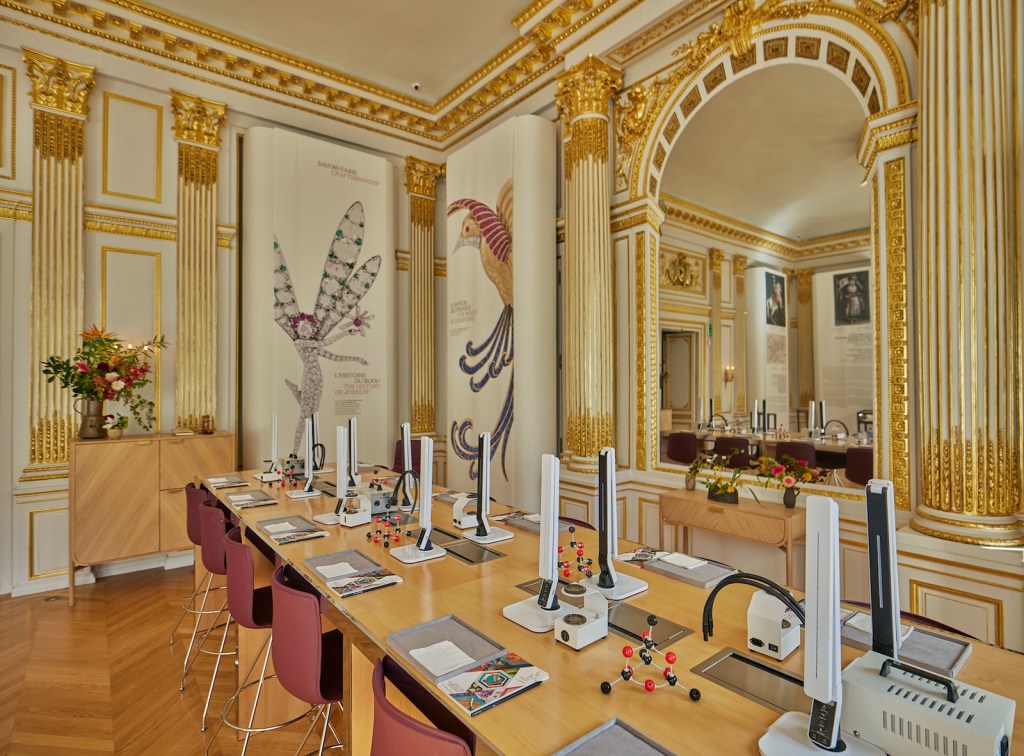
And to add to the jewelry allure of the mansion Marie Antoinette would entrust the trusty count with her jewel-filled chest as the royal family fled from Paris to Varenne. Founded in 2012, L’Ecole, the School of Jewelry Arts brings the fascinating universe of jewelry to the world through exhibitions, classes, an extensive library and conferences, in both English and French.

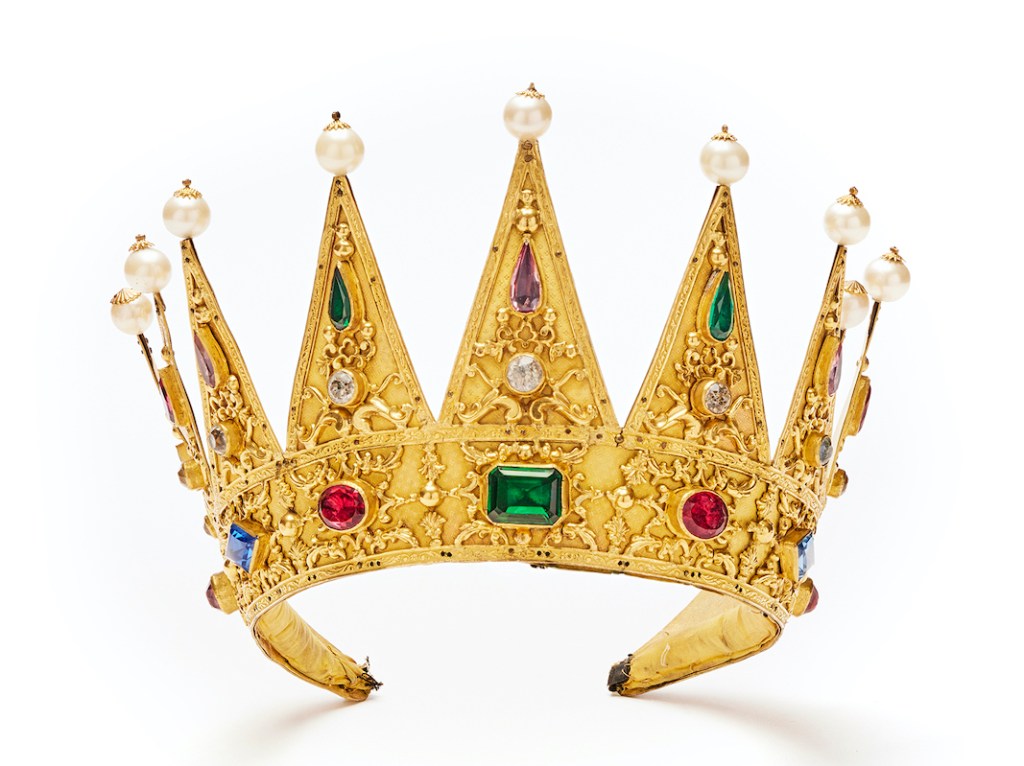
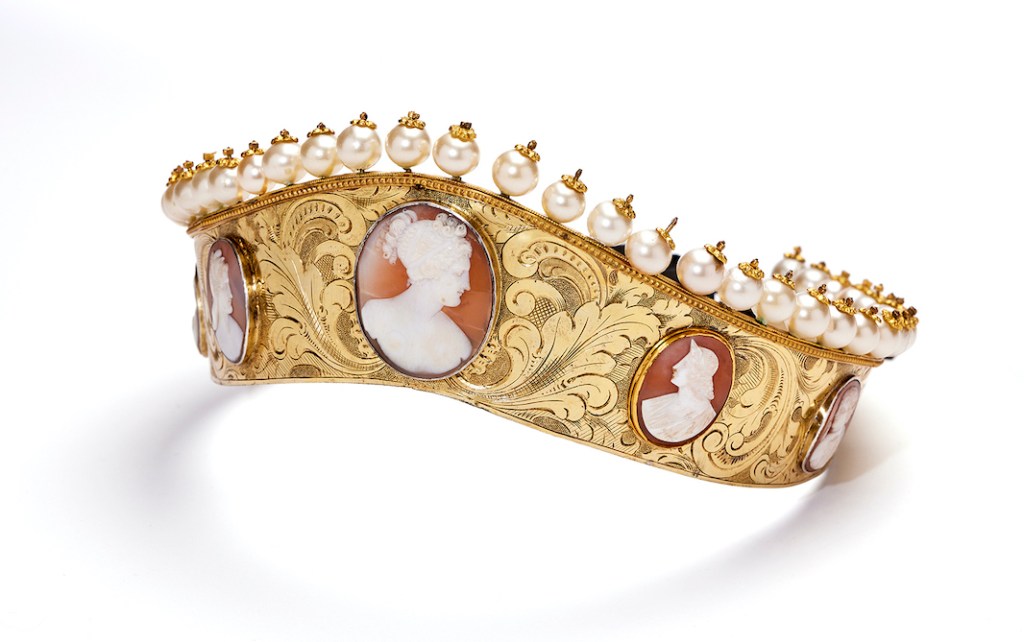
The new venue is located in the heart of a theater-filled and theatrical neighborhood and the opening exhibition runs right down that theatrical alley, in some ways a tin pan alley for the show includes a host of costume jewels in metal alloys and glass stones. Entitled Stage Jewels, the Grand Illusion, the show brings together some 124 stage accessories, art works and documents primarily emanating from the collections of one of the most prestigious theatres in the world: La Comédie-Française. And many of the jewels that were part of the play’s plot were made of gilded metals and rhinestones, truly costume jewelry. They all had to shine out into the theater from the stage and shiny metals and rhinestones did the trick. The first two rooms of the show are in the dark, like the backstage of a theater and here a host of documents and art works are presented including the receipts from some of the suppliers of the stage jewels. Stage jewels and real jewels, including some that belonged to Sarah Bernhardt are exhibited in the third room in bright light like a spotlight.

Tiara worn by the popular French actress Rachel in the role of Phaedra in the play by Jean Racine, Act II, 1843 in an alloy of gilded copper with 15 jewels set into the tiara of colored stones and turquoises. Collection Comédie-Française. Courtesy L’École des Arts Joailliers. Handout via The Gourmet Gazette
« The jewels that the actors and actresses wore on stage mainly came from their personal collections, » explained Agathe Sanjuan, the former director of the library and museum of the Comédie-Française and the curator of the exhibition. « By displaying their jewels on stage, they also presented their success in society. Even if it was contradictory to the plot. The quest for historic truth didn’t come into the picture until the end of the 18th century. »

Gilded metals, copper, gold lamé, sea shells (for the cameos instead of agate), ceramic, fake pearls and glass beads were among the materials used in the fashioning of these stage jewels all contributing to this great illusion playing out on the stage. The temporary exhibition is on until October 13th. Reservations are recommended. ©Trish Valicenti for The Gourmet Gazette. For full program and reservations: The School of Jewelry Arts (L’École des Arts Joailliers), 16bis boulevard de Montmartre, Paris 75009, France. Exhibition: +33 (0)1 70 70 37 50. https://www.lecolevancleefarpels.com/fr/en
Discover more from The Gourmet Gazette
Subscribe to get the latest posts sent to your email.
Categories: Everything Gourmet, Gourmet Fair, Gourmet Wear
 The Gourmet Gazette