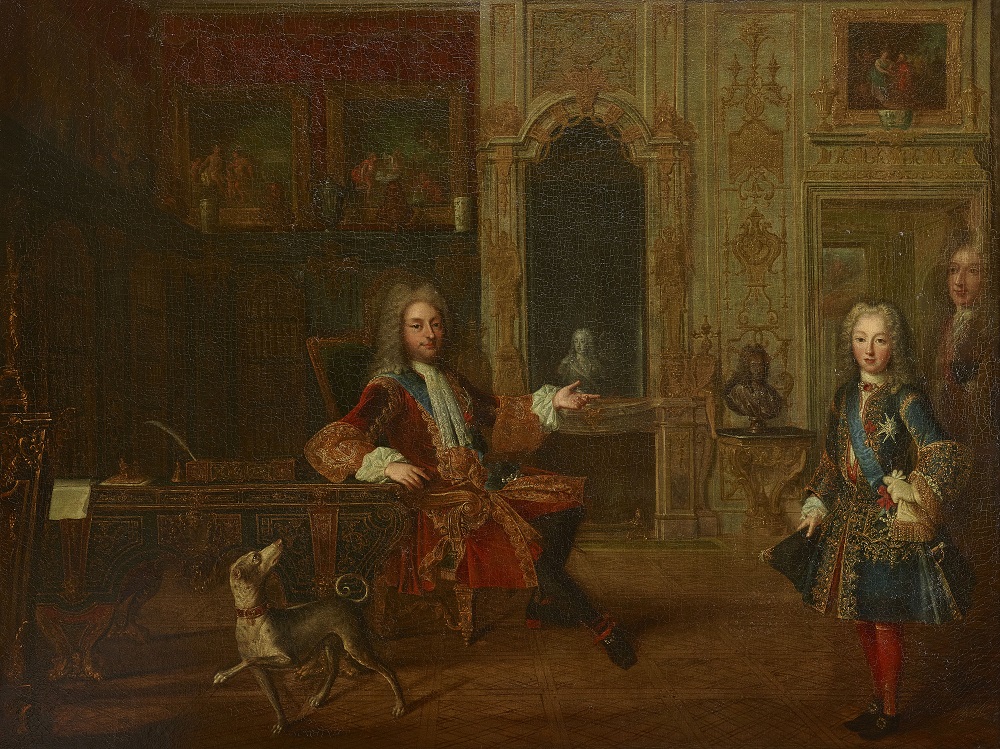
Paris, France — It was a forgotten age, yet a golden age for the decorative arts, for theatre, music and all around comfort. The highly ornamental Rococo style would begin to emerge in this period. When Louis XIV died in 1715, leaving behind a nation in debt, his heir and great-grandson, Louis XV was only 5-years-old. A Regent was appointed, Louis XIV’s nephew Duke Philppe II of Orléans, a Parisian who loved Paris, a prince (he was the grandson of King Louis XIII), soldier and statesman, he was born in his father’s palace at Saint-Cloud just outside of Paris. He was an accomplished painter who brought a certain renewal to art and entertainment, a skilled musician playing the flute, the violin and the harp. He even composed two operas, Jerusalem Freed in 1704, Pentheus in 1705. And the Regent, too, seemingly seriously dabbled in just about everything from blowing glass to making his own perfumes in the Palais-Royal, the Regent’s residence. He worked with his very own alchemist, a Saxonian man named Homberg who was born in the exotic Indies. For the Duke of Orleans was also a libertine, a free thinker, an atheist, debonair and authoritarian. The city of New Orleans in Louisiana is named after him.

The Musée Carnavalet -Histoire de Paris is holding an exhibition showcasing the Régence, an almost forgotten period in French history but which would leave an indelible stamp on the cultural history of France. It is fittingly entitled The Régence in Paris (1715-1723), The Dawn of the Enlightenment. The period marked the return of the King and of political, economic and cultural life to Paris for the court, the government and all the administrations moved back to Paris in 1715. The exhibition is taking place within the framework of the tricentennial of the Regent’s death in 1723.

The Palais-Royal would become the heart of all political life and the soul of a cultural renewal. A period of intense cultural effervescence ensued, giving rise to a world of philosophical, economic and artistic innovations with some of the world’s best known figures emerging at the time: Voltaire, Marivaux, Montesquieu, Law and Watteau. The Italian commedia del’arte which had been banned in 1697, made its grand return in 1716. With the invention of paper money and the bankruptcy of 1720, these years of economic and financial frenzy were interspersed with significant twists and turns. Under the Régence a newfound freedom of criticism emerged, which would become known as the spirit of the Enlightenment. « Here in France to have wit is all the rage; and to showcase one’s wit, it is then imperative that the witty write a book, » writes Montesquieu in his master work, the Persian Letters, which would be censored at the time, in which two Persians, Uzbek and Rica, make fun of Parisian society.
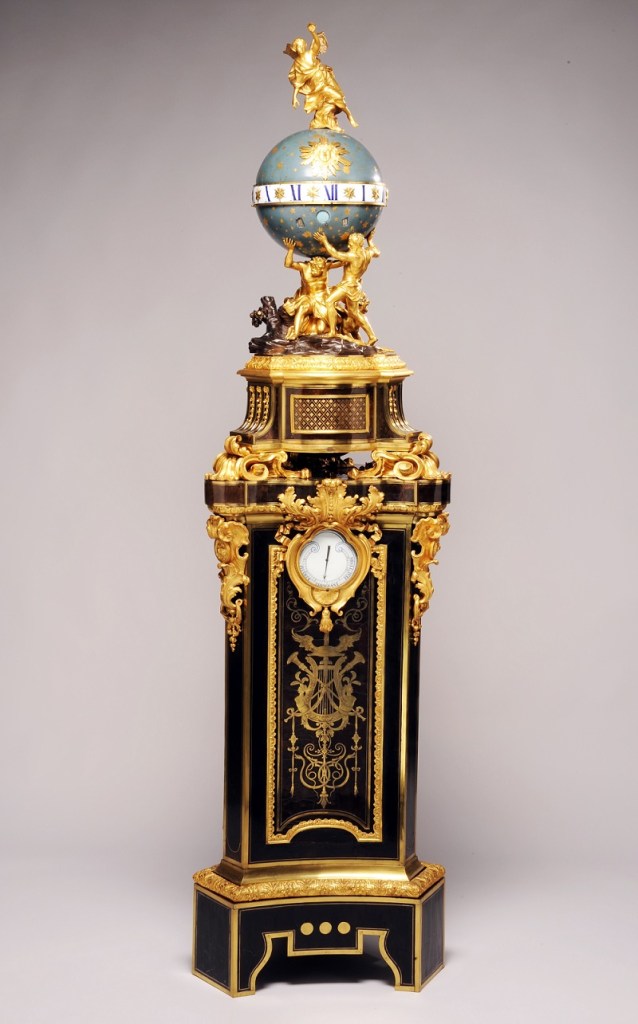
The thematic show brings together a glorious assortment of over 200 works including paintings, sculptures, graphic artworks, items of decor and pieces of furniture emanating from both public and private collections all underscoring how Paris was at this time becoming the cultural capital of France. The consumption of luxury products like Asian porcelain and gilded bronze was on the rise. Meanwhile the heir to the throne was surrounded by a vibrant universe. The regent passed onto him a love of geography and the sciences. The young Louis XV, who would be the first French monarch to introduce cats into the court, had plenty of pets including a rabbit and turtles and was allowed to camp outside the royal finery in a tent with his friends.

Louis XV was crowned King of France in Reims on February 22nd 1723. It would mark the first time that champagne was served for an official event. Philippe of Orleans died in December of the same year in Versailles. The libertine left behind a culturally rich country whose finances were restored, a consolidated monarchy and a country at peace. The Musée Carnavalet – Histoire de Paris is devoted to the history of Paris from prehistoric times to the present and is worth a visit in and of itself. The Régence exhibition is running through February 25th and reservations are highly recommended. ©Trish Valicenti for The Gourmet Gazette. Musée Carnavalet – Histoire de Paris, 23 rue de Sévigné, 75003 Paris, France. http://www.carnavalet.paris.fr/en
To find out about more connections between France and New Orleans see: https://thegourmetgazette.com/2023/12/31/its-cocktail-hour-with-the-sensational-sazerac/
Discover more from The Gourmet Gazette
Subscribe to get the latest posts sent to your email.
Categories: Gourmet Fair
 The Gourmet Gazette
1 reply »