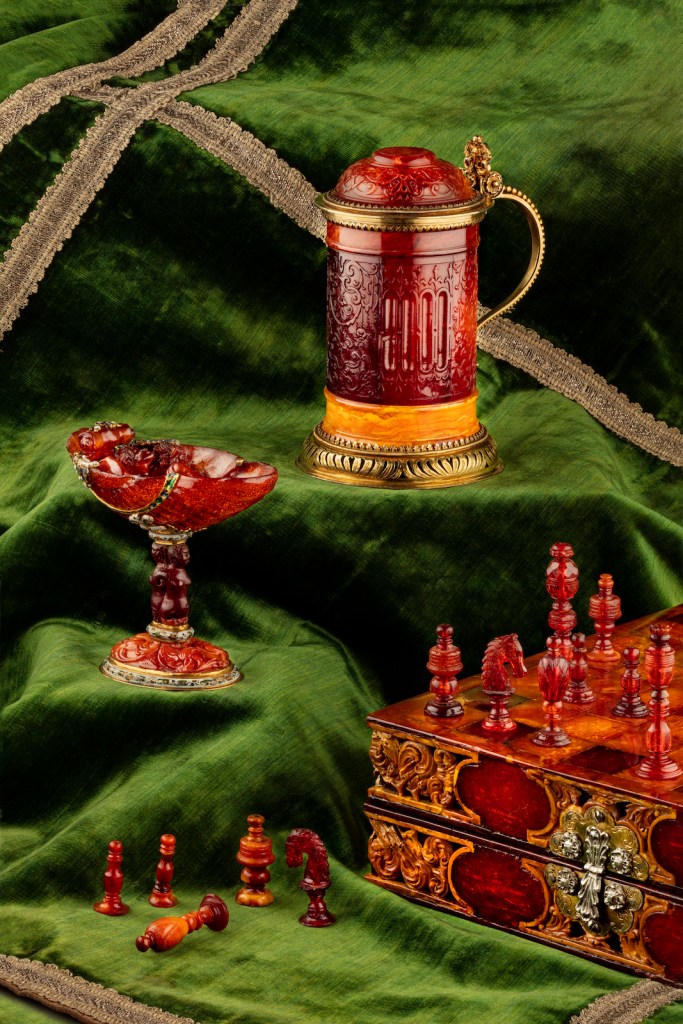
Paris, France — It was considered to be talismanic, able to bring supernatural benefits and protection to its wearer, including immortality, this glowing organic « gem » that is amber. It can generate static electricity on its surface, and so the ancient Greeks called amber elektron, the root for the word electricity.
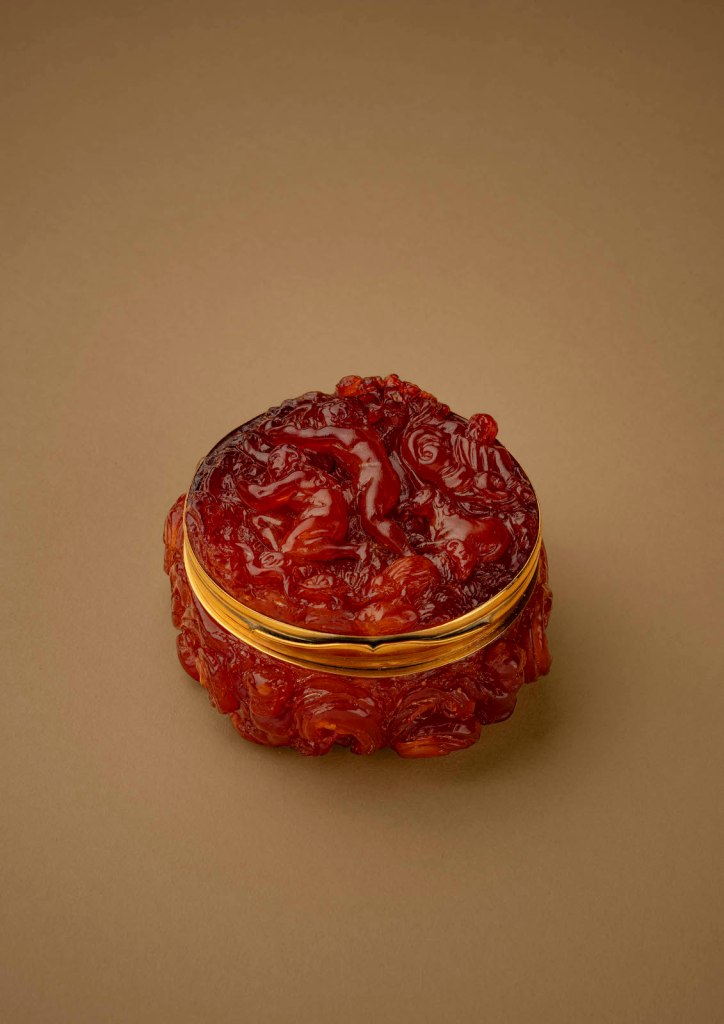
And today it is the object of one of those exceptional once in a lifetime exhibition experiences. The elegant and refined gallery, Galerie Kugel, one of the French capital’s most exceptional galleries, is hosting an unprecedented exhibition showcasing one of the world’s most mysterious and fascinating materials, amber. It has been an object of fascination since Antiquity, and it is found in a range of colors from translucent red to opaque white, and can be even green or blackish. A chessboard, a tankard, myriad statues from the Renaissance, a round box and a stand-out piece — a fantastical creature somewhere between a turtle and a dragon — are among the objects — most of which have never been seen by the public before — that are on display.

The exhibition, entitled Amber: Treasures of the Baltic Sea – the 16th to the 18th Century, is the very first show dedicated to this material in France. It took some 20 years for the Galerie Kugel to assemble the 50 or so works that are on display. The immense variety of the pieces demonstrates the fascination for amber during this time period while showcasing the talent of the artists who fashioned the pieces. Amber’s origins remained shrouded in mystery and were a source of speculation from Antiquity until the 18th century. It wasn’t until 1757 when the Russian savant Mikhaïl Lomonossov determined that it was a fossilized resin and concerning the works on display in this show that emanated from a pre-historic forest dating back to some 30 to 40 million years located beneath the Baltic Sea (still today a source of amber) somewhere between the cities of Dantzig, today Gdansk in Poland and Königsberg today’s Kaliningrad in Russia. Pliny, the Roman naturalist had already in the first century AD produced evidence that amber was in fact a pine-like resin with insect inclusions originating in the north.

Baltic amber has been found in the Greek and Roman worlds, the tomb of King Tut in Egypt and all the way to China, offering a fascinating glimpse into the trade along the ancient Amber Road from the Baltic to the Adriatic. Baltic amber reached a peak in the 16th century when Albert of Brandebourg-Ansbach (1490-1568) or Albert of Prussia converted to Protestantism and transformed the State of the Teutonic Order into the Dukedom of Prussia. His physicians would publish the first books on the extraction of amber and its medicinal properties, including curing stomach ailments, heart disease, convulsions and general infections. In fact the very first book written on amber in 1551 concerned its medicinal properties. Albert de Brandebourg-Ansbach signed a contract, in exchange for a usage fee, for the exclusive extraction of amber with Jan Janski, who hailed from Dantzig. This marked the beginning of an extensive trade in and production of art objects in amber. They were to become the great diplomatic gifts of Prussia and were sought after to decorate the curiosity cabinets of the sovereigns and princes of Europe.

The Galerie Kugel is specialized in presenting unusual and fantastic objects to the public in exhibitions that revolve around a material, technique or type of object. Nicolas and Alexis Kugel, the fifth generation of the family of art dealers, travel the world to seek out treasures that have also contributed to the enrichment of the collections of the great museums of the world. In 2015, Laura, who represents the sixth generation of the family, joined the gallery, located in the Collet mansion on the banks of the Seine. The amber exhibition is on until December 16th and is free of charge. Mondays to Saturdays, 11am until 6pm. 25, quai Anatole France, 75007 Paris, France. https://www.galeriekugel.com/en/ ©Trish Valicenti for The Gourmet Gazette
Discover more from The Gourmet Gazette
Subscribe to get the latest posts sent to your email.
Categories: Gourmet Fair
 The Gourmet Gazette
1 reply »