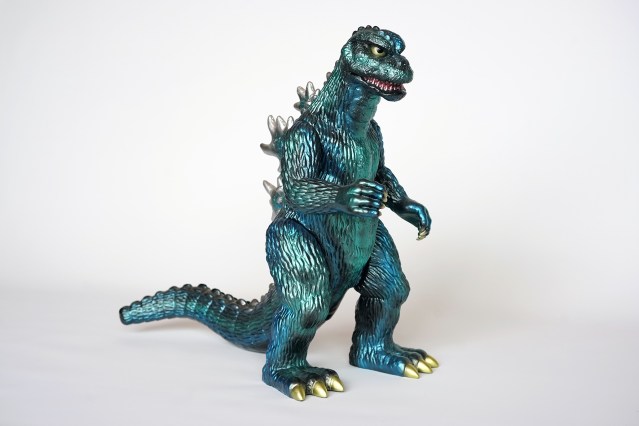
collection Claude Estèbe
Paris, France — It is a mysterious universe populated by monsters, ghosts, ghouls, demon slayers and grotesque characters. It is an art and literary form that demonstrates the scope of Japanese narrative art, ranging from the most hilarious humor to the most edifying stories. The word manga is derived from the kanji characters « man » meaning whimsical and « ga » meaning pictures. In the form as we know it, it dates back to the late 19th century and still today traditional Japanese manga are composed in black and white and continue to captivate the world.
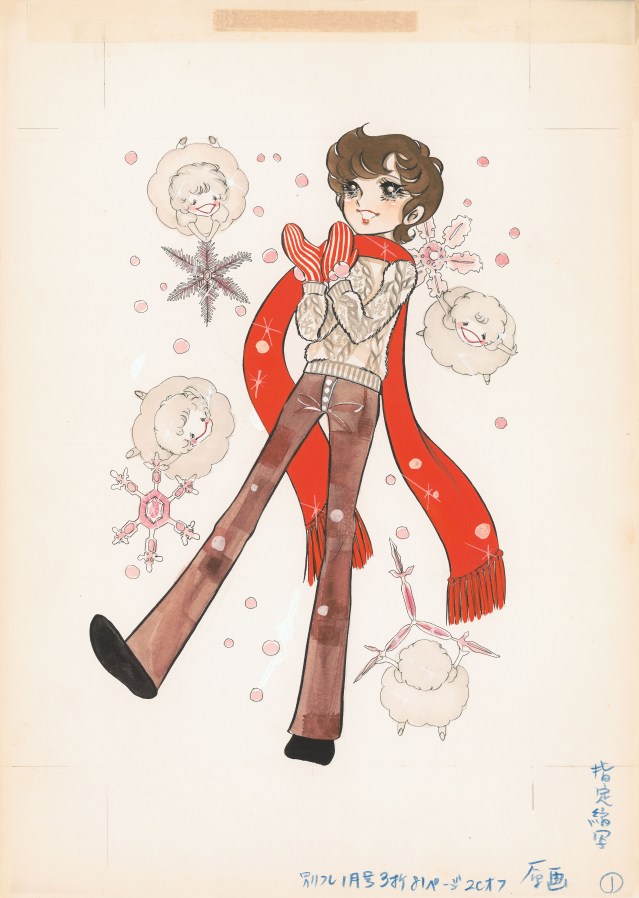
By the late 1980s and 1990s it headed into a golden age in Japan and the world’s most successful manga, One Piece, written by Eiichiro Oda, has sold more that 500 million copies since 1997. It tells the story of Monkey D. Luffy who travels the world seeking out a legendary treasure. But sales, too have skyrocketed in United States and Great Britain with the COVID-19 lockdowns among the major impetuses. In an exhibition entitled Manga: An Art of Its Own, the Guimet Museum, France’s national museum devoted to the Asian Arts, explores the manga in all of its forms from its evolution from a Japanese cultural institution to worldwide phenomenon. Osamu Tezuka’s Astro Boy, serialised from 1952 until 1968, quickly became (and remains) immensely popular in Japan and elsewhere. Through original comic strips and magazines, juxtaposed with objects and graphic works from the museum’s collections the exhibition Manga: An Art of Its Own! takes a look at the birth and complex evolution of Japanese comics, its cultural influences and its origins, often older than they seem.
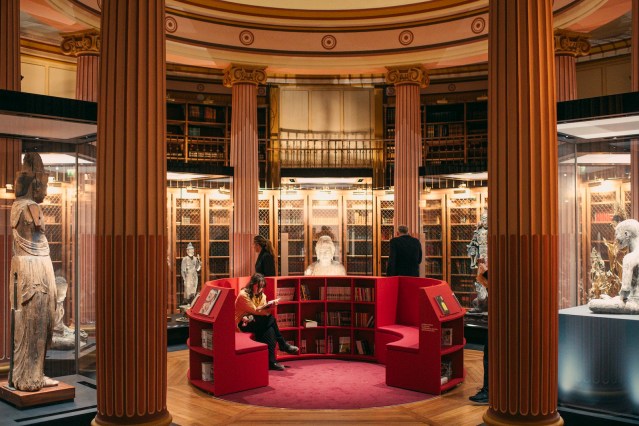
Hokusai’s Great Wave is on the exhibition agenda as well in a room specially dedicated to this iconic work, an immersive, educational and meditative experience takes the visitor on a journey of discovery of this absolute masterpiece of universal art. Alongside the original print, drawings by comic book artists such as David Etien, Coco and Moebius, as well as a spectacular haute couture dress by Dior, illustrate the influence that this icon of Japanese art continues to exert on artists around the world. And, we learn, in a reversal of roles, Godzilla, the giant apocalyptic lizard, first appeared in Japan in cinema and was subsequently featured in myriad mangas. The manga exhibition is on until March 9th, but the museum is worth a visit in and of itself for its brilliant collection of the arts of Asia. ©Trish Valicenti for The Gourmet Gazette. The Guimet Museum, 6 Pl. d’Iéna, 75116 Paris, France, tel:+33 (0)1 56 52 54 33. https://www.guimet.fr/en
Discover more from The Gourmet Gazette
Subscribe to get the latest posts sent to your email.
Categories: Gourmet Fair
 The Gourmet Gazette