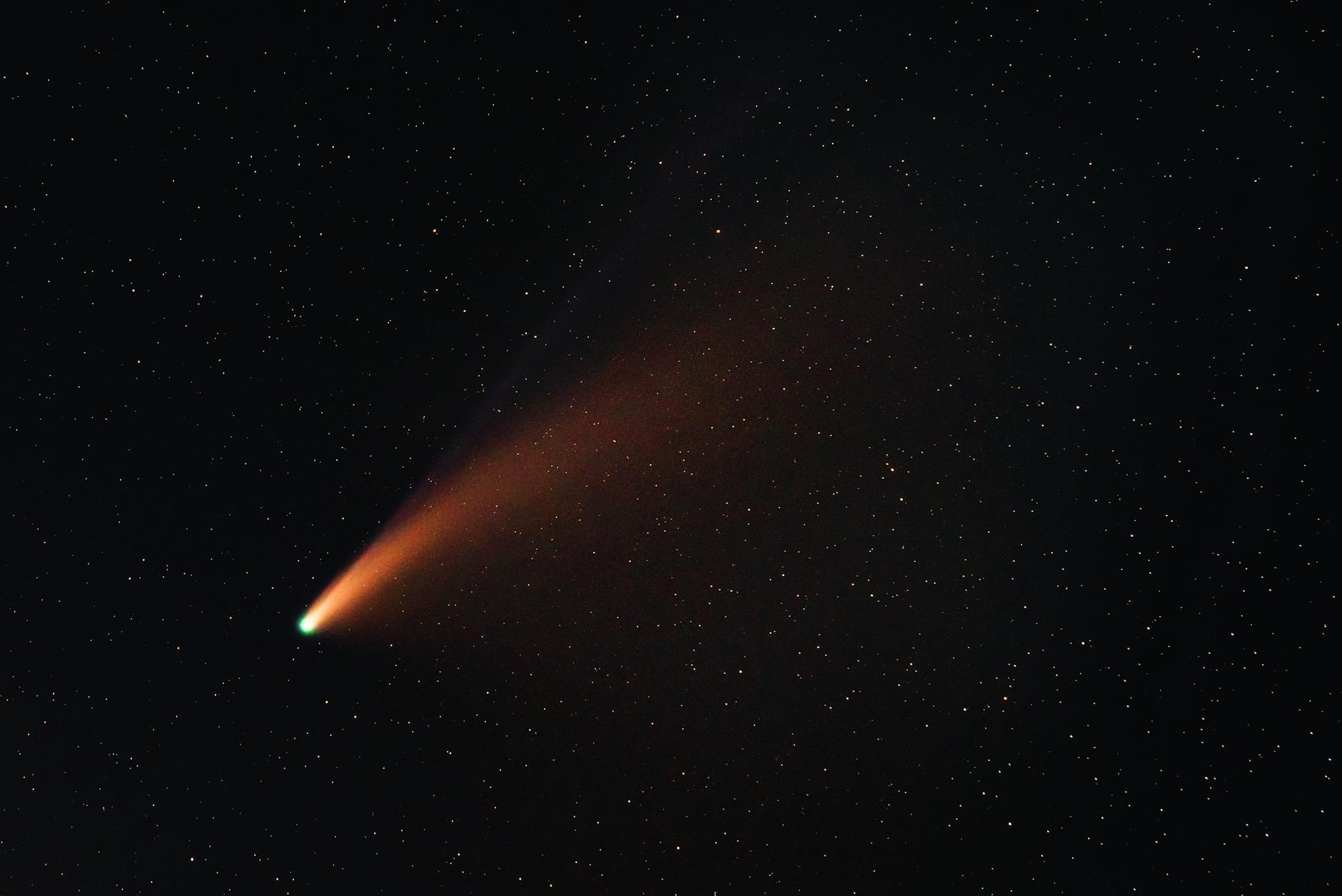
Astronomers have confirmed the discovery of a rare celestial visitor: a comet from beyond our Solar System. Officially named 3I/ATLAS, this newly identified interstellar object is only the third of its kind ever observed, following the famous first interstellar object, the red-colored Oumuamua in 2017 and the second one, the rogue and first interstellar comet Borisov in 2019. The interloping interstellar comet is approximately 670 million kilometres from the Sun and will make its closest approach in late October 2025, passing just inside the orbit of Mars. It is thought to be up to 20 kilometres wide and is travelling roughly 60 km/s relative to the Sun. It poses no danger to Earth, coming no closer than 240 million kilometres – over 1.5 times the distance between Earth and the Sun.
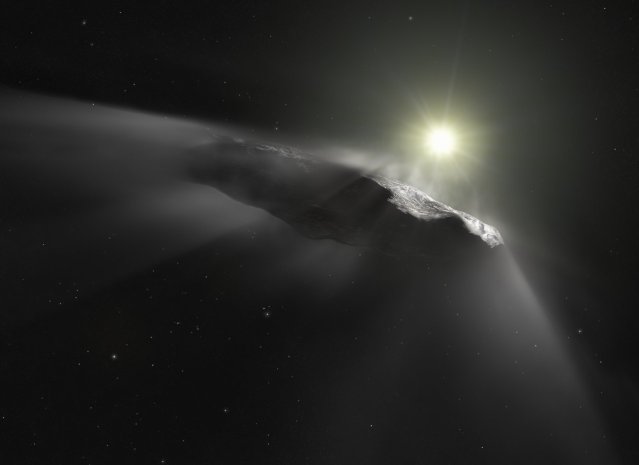
Oumuamua. Observations made with the NASA/ESA Hubble Space Telescope and others showthat the object is moving faster than predicted while leaving the Solar System. Photo: ESA/Hubble, NASA, ESO, M. Kornmesser. Photo courtesy ESA. Handout via The Gourmet Gazette
What makes interstellar objects like this comet so extraordinary is their absolutely foreign nature. While every planet, moon, asteroid, comet and life form that formed in our Solar System shares a common origin, a common heritage, interstellar visitors are true outsiders. They are remnants of other planetary systems, carrying with them clues about the formation of worlds far beyond our own, explains the European Space Agencyy (ESA). The European Space Agency (ESA) is an intergovernmental organisation with 23 Member States that is Europe’s gateway to space.

The comet was first spotted on 1 July 2025, by the Asteroid Terrestrial-impact Last Alert System (ATLAS) telescope in Río Hurtado, Chile. Its unusual trajectory immediately raised suspicions that it originated from interstellar space. This was later confirmed by astronomers around the world, and the object was given its formal designation: 3I/ATLAS, the 3I indicates its status as the third known interstellar object.

Comets are frozen leftovers from the Solar System’s formation billions of years ago. They heat up as they swing toward the sun, releasing their characteristic streaming tails. Comets have fascinated mankind for millennia. The earliest known recording of a comet sighting was made by a Chinese court astrologer in 1059 B.C. The Chinese called comets broom stars not only because of their flared profile but because comets were thought to herald the sweeping away of the old and the arrival of the new. Meanwhile the ancient Greeks considered them to be a sign of dire things to come, a belief held by many throughout the Middle Ages. A portion of the Bayeux tapestry, which commemorates the Norman conquest of England in 1066, portrays a comet flying through the sky, the usual comet-thing to do. King Harold II of England was killed that same year at the Battle of Hastings, thus playing out the comet’s role as a harbinger of doom. ©Trish Valicenti for The Gourmet Gazette
Discover more from The Gourmet Gazette
Subscribe to get the latest posts sent to your email.
Categories: Gourmet Fair
 The Gourmet Gazette