
She was born a Celtic princess in Ireland in the 7th century. She would die a martyr in the town of Geel in Belgium, beheaded by her father. Canonized in 620, Dymphna, now Saint Dymphna, became the patron saint of those suffering from nervous and mental afflictions. Her short and sad life is recounted in a remarkable, monumental early 16th century altarpiece, a masterpiece by the grandson of the celebrated Flemish master Rogier Van der Weyden. These eight wooden panels — after surviving being sawed, stolen, neglected, vandalized, sold and totally forgotten about —have been meticulously restored by the Phœbus Foundation in Antwerp, Belgium. The astonishing panels are currently on display in the Royal Monastery of Brou in the French city of Bourg-en-Bresse, which is also famous for its cuisine. Entitled Mad about Dymphna, Astonishing Stories of a Flemish Painting, the exhibition and the panels recount the saint’s tragic life, a life of royalty, piety, death and which had a deadly brush with attempted incest.
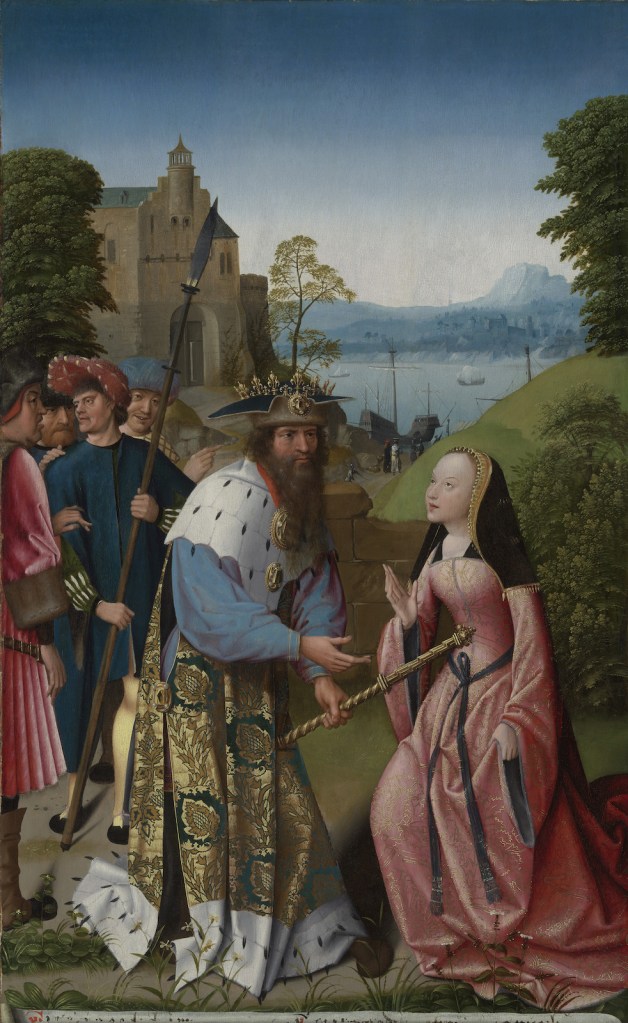
Born to a pagan father, King Damon, and a devout Christian mother, Dymphna consecrated herself to Christ and took a vow of chastity at the age of 14. Shortly thereafter her mother died and her father’s mental health spiralled into a rapid decline. He became so unhinged that his counsellors suggested he remarry. So scouts and messengers were sent about his town and nearby lands to find a suitable woman of noble birth. He received advice to marry his own daughter and he agreed. Dymphna subsequently fled from the castle with her confessor, a priest named Gerebran, two servants and the king’s fool. They sailed to what is today Belgium and hid in the town of Geel where Dymphna built a hospital for the poor and the sick which was ultimately her undoing because as she was using her own wealth, the king was able to find her. He had the priest decapitated and when his daughter refused to marry her father, he then, well, decapitated her, too, with his sword. Dymphna was 15-years-old at the time of her death.

Her remains along with those of the priest were buried in Geel by the local residents who laid them to rest in a cave. A church, dedicated to Saint Dymphna, who became known as the Lily of Éire, was built there in 1349 drawing pilgrims seeking treatment for mental illnesses. It burned down in the 15th century and was built anew and consecrated in 1532 where it stands today above the location where her body was originally buried. And still today the town continues in its tradition of caring for the mentally ill in the homes of host families giving them access to family life. Geel from the time of the building of the first church to Saint Dymphna had adopted the practice of what would become de-insitutionalized psychiatric care. Today there is a psychiatric center but over 700 years later several hundred patients are still placed in the homes of Geel’s inhabitants. The community-based care model of Geel was selected in 2023 by UNESCO to be placed on its Register of Good Safeguarding Practices which allows parties and communities to share successful safeguarding experiences and examples.
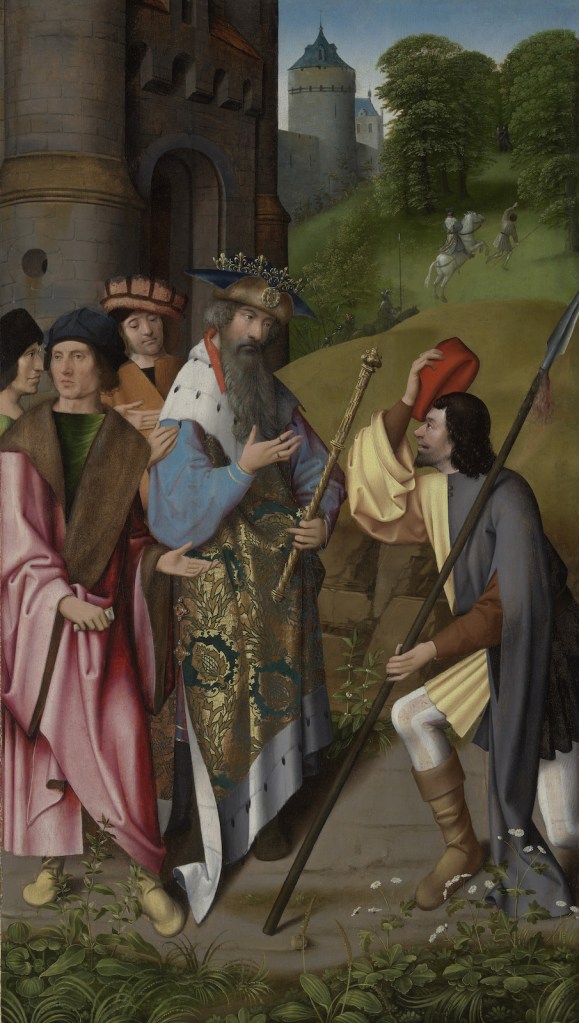
Meanwhile the current exhibition devoted to the Saint Dymphna panels was organized and financed by the city of Bourg-en-Bresse, the Centre des monuments nationaux (France’s National Monument Center) and the Phœbus Foundation. The panels have previously been exhibited in Ireland, Estonia and Belgium. They are on loan from the Foundation which acquires works of art, conserves them, conduct scientific research and shares them as much as possible through exhibitions and loans. The exhibition in Bourg-en-Bresse is on until August 17th. The monastery and the city are both worth a visit in and of themselves. ©Trish Valicenti for The Gourmet Gazette
63 boulevard de Brou, 01000 Bourg-en-Bresse. Tel: +33 (0)4 74 22 83 83.
http://www.monastere-de-brou.fr
https://phoebusfoundation.org/en/
Discover more from The Gourmet Gazette
Subscribe to get the latest posts sent to your email.
Categories: Gourmet Fair
 The Gourmet Gazette