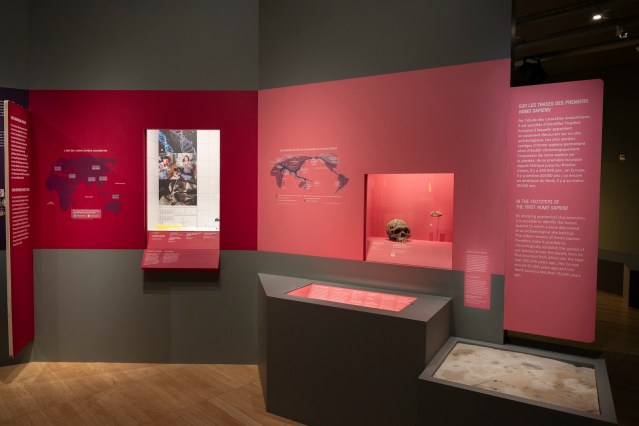
Paris, France — Migration has always existed. In fact it is as old as our world itself. Movement is an integral part of our heritage as a human species. Humans never move alone, but with a certain environment: other animals, plants, micro-organisms, as well as their language, their cuisine, a whole culture. All of these entities are travelling, mingling and mixing. We are heirs to thousands of years of migration, visible in our current societies. Since it emerged on the African continent 300,000 years ago Home sapiens has not stopped moving, exploring and colonizing the planet, even its most hostile environments. And it is the object of an exhibition at the Musée de l’Homme (the Museum of Mankind) in Paris, one of the world’s leading anthropology museums. Migration is a theme that echoes the belief of Paul Rivet, the founder of the Musée de l’Homme who commented, « Humanity is one and indivisible, not only in space, but also in time. »
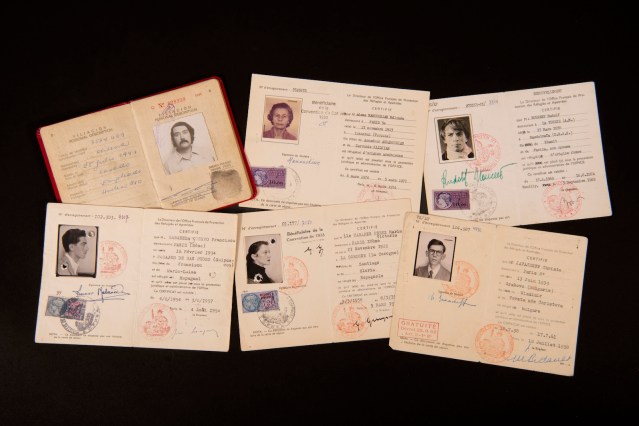
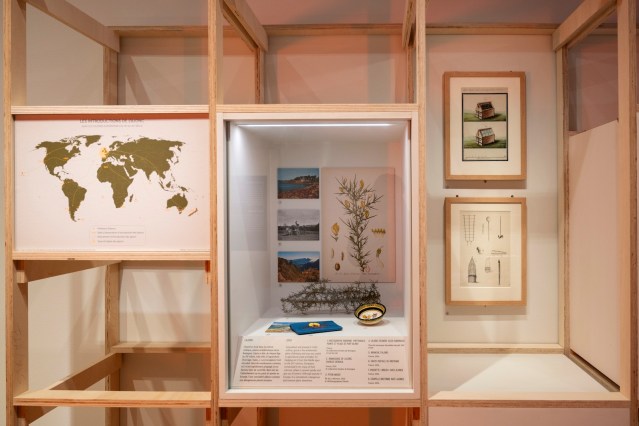
Entitled Migrations, Human Odyssey, the show takes a look at who migrates, why and when as well as the directions in which they go. The exhibition brings together documents, works of art, photographs, films, objects associated with migration and personal stories from migrants to and from the world over as well as a host of interactive displays. There are some surprising demographics, too, underscored and outlined in the show. For example 96% of human beings live in their country of birth and 48 percent of all migrants are women.
The Musée de l’Homme was inaugurated in June, 1938 and focuses on the evolution of humans and human societies, combining biological, social and cultural approaches. It is located in the Passy wing of the Palais de Chaillot in Paris, a building originally constructed for the 1937 World’s Fair. It houses collections of prehistory, biological and cultural anthropology, a centre for research, higher education and training, and the dissemination of knowledge on the evolution of humans and human societies, all under the same roof. The museum’s priceless collections include Cro-Magnon fossils while its prehistory and anthropology collections are among the finest in the world and worth a visit in and of themselves. The Musée de l’Homme is part of the Muséum national d’Histoire naturelle -France’s national natural history museum. The Migrations exhibition is on until June 8th and during the closing weekend an exceptional guest from a faraway land will be present. See: https://thegourmetgazette.com/2025/06/02/fantastic-feathers/
17 Pl. du Trocadéro et du 11 Novembre, 75016 Paris. Telephone: + 33 (0)1 44 05 72 72. https://www.museedelhomme.fr/en
Discover more from The Gourmet Gazette
Subscribe to get the latest posts sent to your email.
Categories: Gourmet Fair
 The Gourmet Gazette