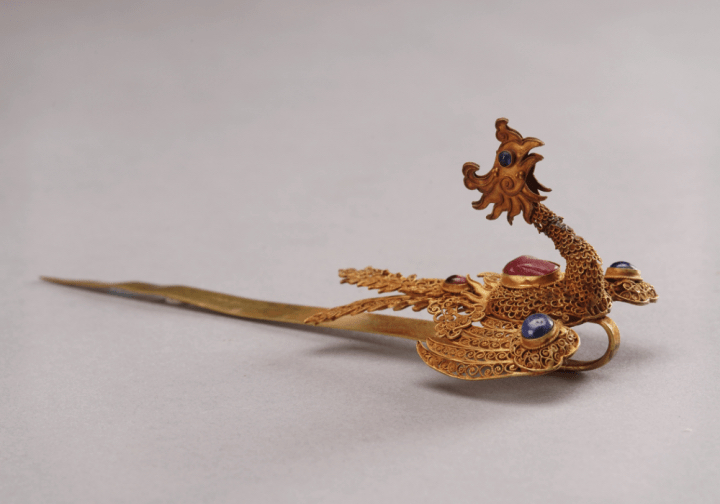
Paris, France —A gold phoenix hairpin, a sceptre of gemstones and jade. The court of the Ming Dynasty, which ruled from 1368 until 1644, has made its way to the French capital in the form of beautiful, refined gold ornaments that were worn by the women of this dynasty known for its excellence in a wide range of arts and crafts and in particular its opulent masterpieces in gold. It was the Ming emperors who built the Forbidden City and the Great Wall of China, but also saw significant explorations by the maritime route with a new class of wealthy merchants emerging and an abundance of luxury products, notably in gold, jade, gemstones and silk. The gold craftsmanship of the Ming dynasty was unique, intricate and largely unparalleled at the time.
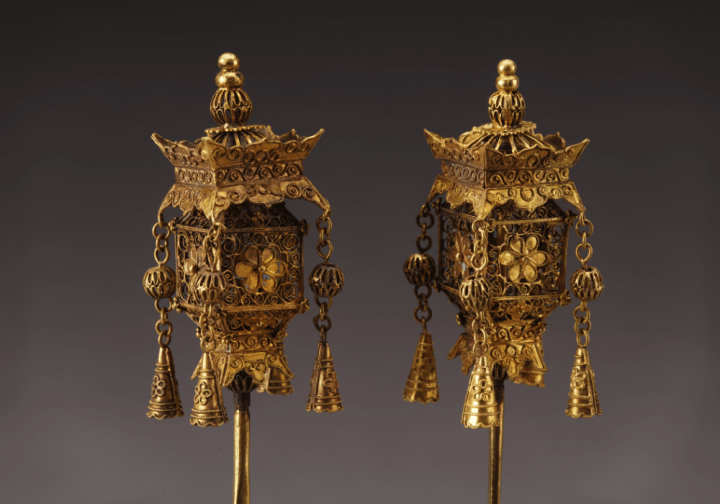
This exceptional world is currently unfolding at the Musée Guimet, the Asian Arts museum, in a temporary exhibition entitled Gold Ming, The Splendors and Beauties of Imperial China (14th-17th centuries). The show has been made possible through exceptional loans of jewelry and vases from the Qujiang Fine Arts Museum in X’ian, China and is being held within the 60th anniversary of diplomatic relations between France and China and the Franco-Chinese year of Cultural Tourism.
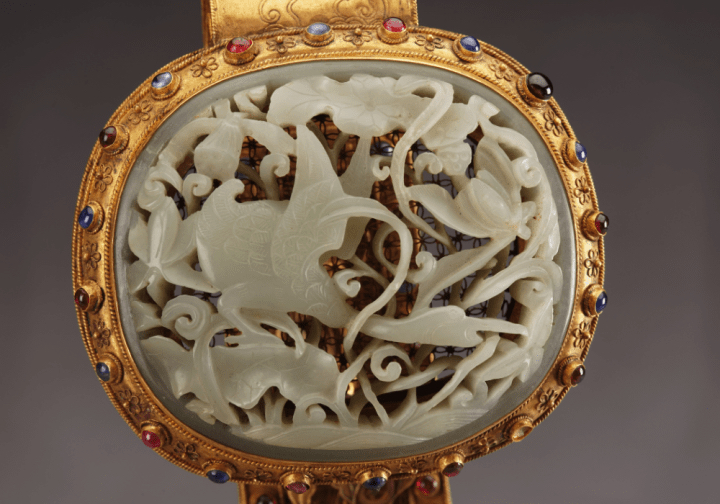
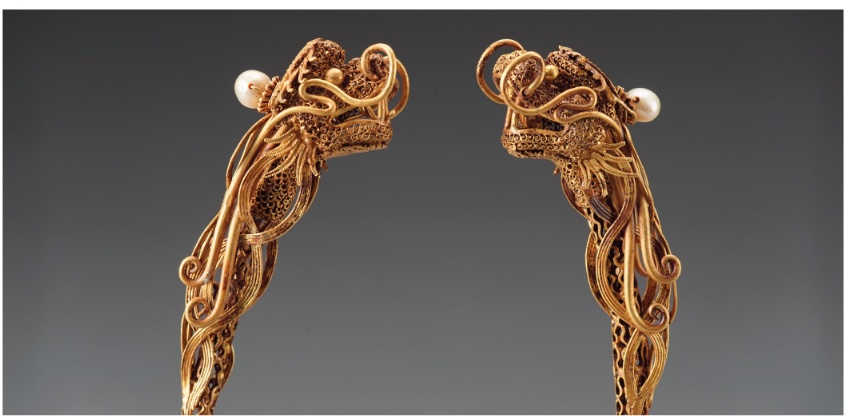
Gold, jade and silver ornaments were essential additions to the clothing of the elite and aristocratic women’s attire and were closely associated with the ideal of feminine beauty. Some of the most remarkable pieces were decorated with gemstones: rubies, spinels, blue, yellow or green sapphires, or other rare materials such as white or pale-green jade, fresh-water pearls and kingfisher feathers. Gold was mined in southwestern China since medieval times and was sometimes imported. Under the Ming Dynasty gold was used only to fashion luxury objects; jewlery and prestigious tableware.
The choice of the motif was also of decisive importance. In addition to being insignia, they were believed to bring wealth, happiness, health and longevity to the wearer. Flowers and birds were traditionally associated with the seasons and brought good fortune. The prunus evoked the beauty of winter, the peony abundance and spring, the lotus purity and summer, and the chrysanthemum integrity and autumn. Bats were synonymous with happiness, the crab with harmony and the butterfly with longevity. The pieces on display are nothing short of masterpieces. Gold vases were used for decor or wine. The Mings were contemporaries of the Italian Renaissance and Ming means glistening or dazzling. ©Trish Valicenti for The Gourmet Gazette. The Ming Gold exhibition is on in Paris until January 13th before returning to the Xi’an Qujiang Museum of Fine Arts in China which is a private museum that opened in 2012. The Guimet Museum, 6 Pl. d’Iéna, 75116 Paris, France, tel:+33 (0)1 56 52 54 33. https://www.guimet.fr/enhttp://www.qujiangmuseum.com
Discover more from The Gourmet Gazette
Subscribe to get the latest posts sent to your email.
Categories: Gourmet Fair, Gourmet Wear
 The Gourmet Gazette