
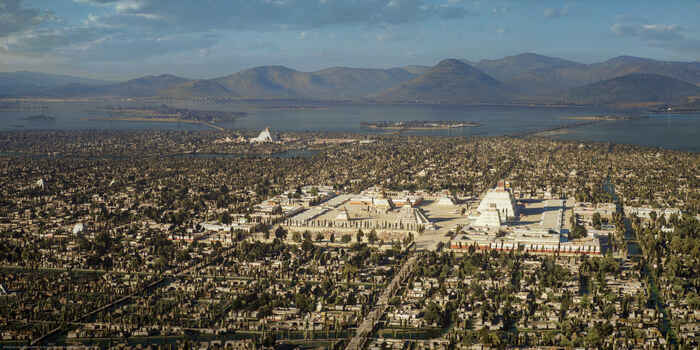
Paris, France — We called them Aztecs. They called themselves Mexica. They left behind an extraordinary civilization punctuated with mysteries, splendor and blood thirsty sacrifices. They established their capital city in what is today’s Mexico City, they called it Tenochtitlan, a spectacular settlement on an island in Lake Texcoco, in 1325. Causeways led to the main land, the island housed a giant pyramid-like temple, the Great Temple, known in Spanish as the Templo Mayor. It was dedicated simultaneously to Huitzilopochtli, god of war and sun, and Tlaloc, god of rain and agriculture, each of which had a shrine at the top of the structure with separate staircases. The central spire was devoted to Quetzalcoatl, the feathered serpent god, in his form as the wind god, Ehecatl. The city of an estimated 200,000 at its apogee was filled with temples, palaces, the opulent homes of the nobility and great gardens. There were grids of streets, interlacing canals and a clean layout of four quadrants meeting at a central square. There were floating market gardens reached by canoe. There was even a ceremonial sports court behind the Great Temple. It would come to a crashing end during the 16th century Spanish conquest of Mexico.
« We went into the orchard and garden which was a marvellous place both to see and walk in, » wrote Bernal Diaz de Castillo, a veteran of Hernan Cortes’s campaign to conquer Mexico who etered the city in 1519, « I never tired of noticing the paths choked with roses and other flowers, and the many local fruit trees and the pond of fresh water. Everything was shining and decorated with differt kinds of stonework and paintings that were a marvel to gaze upon. Then there were birds of many breeds and varieties that came to the pond. And he would reflect on the fate of the Aztecs, now known as the Mexica people, as well, “I thought that no land like it would ever be discovered in the whole world. But today all that I then saw is overthrown and destroyed: nothing is left standing. »
But fortunately all was not lost. When construction workers were laying electrical cables near the center of Mexico City, in 1978, they discovered a remnant of the remains of the ancient city of Tenochtitlan and its Great Temple, the huge stone portrait of Coyolxauhqui, the dismembered rebellious sister of Huitzilopochtli, the main deity of the Mexica. A new era in Mexican archeology opened up and today treasures from the excavations are in Paris in an exhibition entitled Offerings and Gods at the Temple Mayor. The Musée du quai Branly-Jacques Chirac is presenting the result of research and excavations carried out at the Great Temple and city of Mexica culture. This unique exhibition of the story of Mesoamerican archaeology and culture is being presented in Europe for the very first time revealing not only a dynamic, predatory society, but also artistic excellence and complex symbolic and religious thought. The Mexica people, more widely known as the Aztecs, intertwined their lives with their revered divinities paying homage to them and often requesting certain favors in their return. Brutal human sacrifices were an integral part of their society.
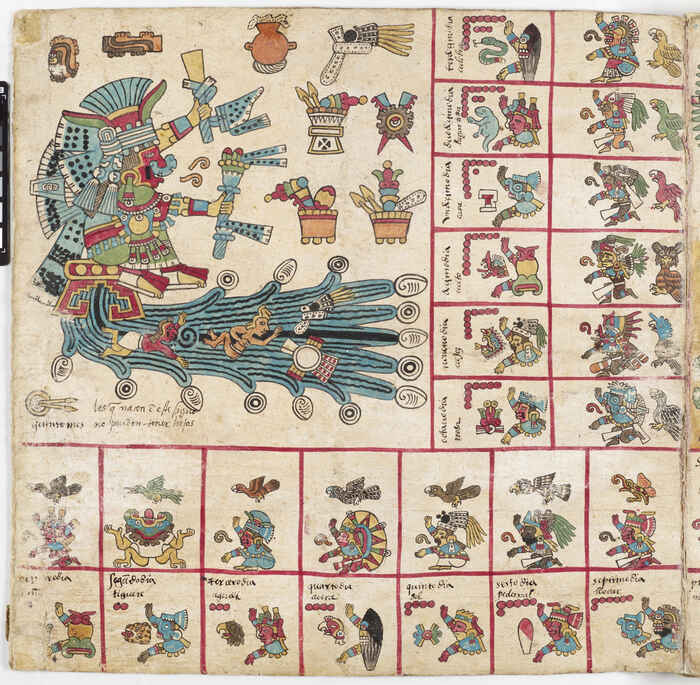
The Mexica people had quite simply created the greatest empire in Mesoamerica. Their culture was complex, filled with symbolism and possessed a rich pantheon of deities, a oneness with nature and the plant and animal kingdoms and a penchant for sacrifices. Their leader’s palace was decorated with murals, frescoes, ornate woven cloths and golden screens to prevent people seeing him while he was eating. He had a large and impressive private zoo housing nearly every species in Middle America including jaguars and tapirs, rattlesnakes in feather lined jars, an aviary and gardens. And a staff of 300 just to maintain the zoo. All of this splendor would come to a crashing end with the Spanish conquest of Spain in the 16th century. Their ruler at the time of the conquest was Motecuhzoma. The Spaniards would kill him. Beautifully executed statues, masks and ritual objects are among the works on display at the Paris exhibition along with the famous codex, paintings on leather or bark, for the Mexica lacked a written language and used pictures to help them remember details when reciting their intricate myths. The excavations revealed an astonishing discovery of 209 offerings to the deities including minerals, plants, animals, human beings and cultural objects. They come from many regions of the Mexica Valley and beyond attesting to the exceptional political and economic power of the Mexica (Aztec) Empire.
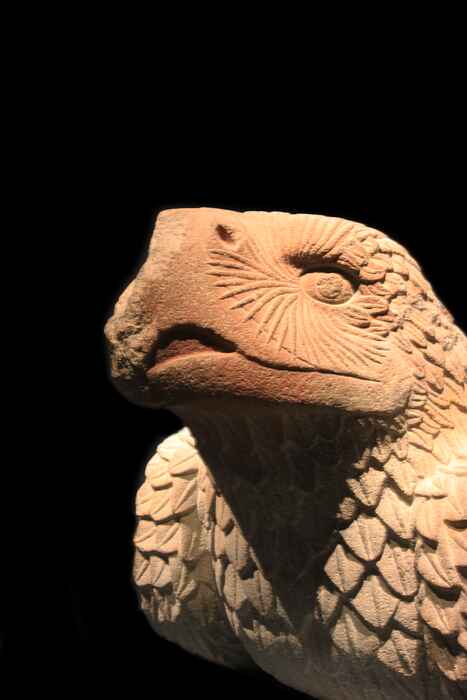
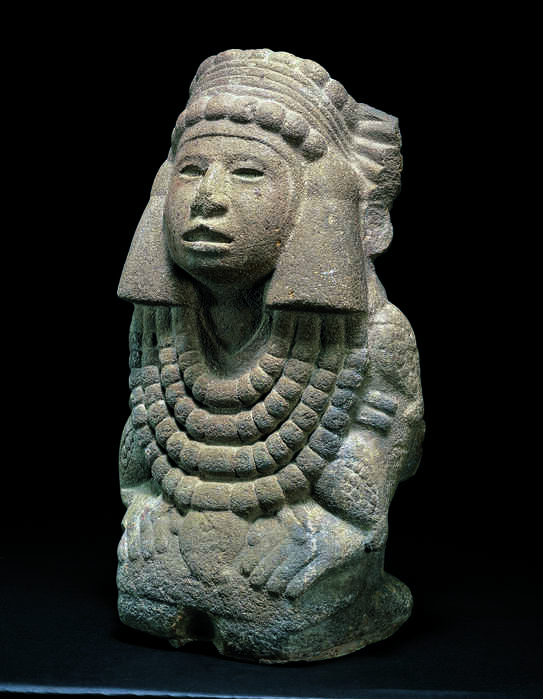
The exhibition opens a window onto a better understanding of this fascinating people, their beliefs and their environment. One discovers a ceremonial recipient depicting the eagle, cuauhxicall, who served the Mexica god of war and sun Huitzilopochtli which probably received the hearts and blood of human sacrifices who were isolated in the sacred enclosure of the temple. The eagle was the god’s animal disguise or nagual. Huitzilopochtli and his half-sister Coyolxauhqui, the goddess of the moon, were deities specific to the Mexica people while the others are common to several Mesoamerican cultures. Tlaloc was the god of rain while his companion Chalchiuhtlicue was the powerful goddess of the waters and sea. Animals, too, had great meanings in the Mexica culture. The frog represented rain, the jaguar the night because of his nocturnal habits.
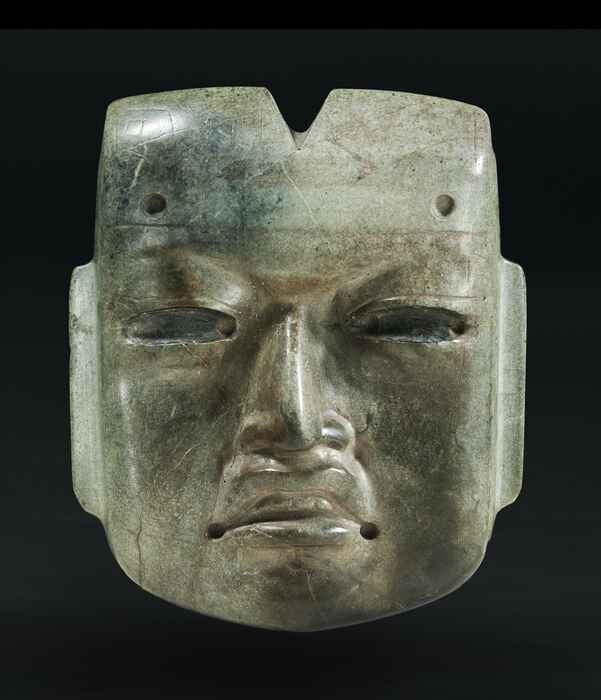
Their arts were the epitome of sophistication, their sacrifices particularly violent. Some died by having their hearts ripped out others just had their throats sliced open or were burned to death. Animals served as sacrifices as well and the palace kept a vivarium of the great predators like jaguars, pumas, wolves, eagles and birds of prey. The exhibition, which is running until September 8th was organised by the Musée du quai Branly-Jacques Chirac and the l’Instituto Nacional de Antropología e Historia (INAH), Mexico. Musée du quai Branly – Jacques Chirac. 37, quai Branly or 206 and 218, rue de l’Université 75007 Paris, France. Tel: + 33 01 56 61 70 00. https://www.quaibranly.fr/en/
©Trish Valicenti for The Gourmet Gazette
Discover more from The Gourmet Gazette
Subscribe to get the latest posts sent to your email.
Categories: Gourmet Fair
 The Gourmet Gazette