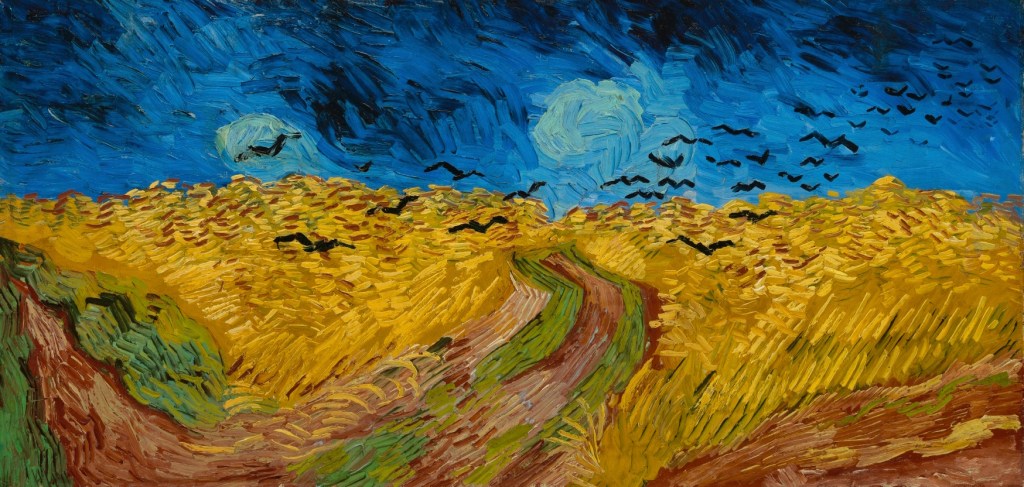
Paris, France — Crows in a wheat field, rocking row boats, houses or a church seemingly in perpetual motion. These were the final days. The paintings that emerged from Vincent van Gogh in Auvers-sur-Oise in the brief weeks preceding his death from a self-inflicted wound. He would arrive in Auvers-sur-Oise on May 20th 1890 and would die there on July 29th following a suicide attempt. In just two months he would produce 73 paintings and 33 drawings including the masterpieces known throughout the world: Portrait of Dr Paul Gachet, The Church in Auvers-sur-Oise and Wheatfield with Crows.

The show, entitled Van Gogh in Auvers-sur-Oise, The Final Months, brings together 40 exceptional paintings and 20 drawings by Van Gogh executed during this fertile period with some being presented in Paris for the first time. It is being held at the Musée d’Orsay and was organized by the Musée d’Orsay and the Van Gogh Museum in Amsterdam. The exhibition highlights this period thematically, covering his first landscapes featuring the village, portraits, stilllifes, and landscapes depicting the surrounding countryside, along with a series of paintings in panoramic format, unique in Van Gogh’s body of work, and a number of works he brought back from the asylum in Saint-Rémy.
Son of a pastor, Van Gogh would undertake theological studies which he eventually abandoned becoming a lay preacher in the Borinage region of Belgium to a population of coal miners. Supported by his brother Theo he turned to painting and moved in with him in Paris where he worked with artists like Emile Bernard and Paul Gauguin. He would move to sun swept Arles in 1888 where the first attacks of madness occurred: he cut off his left ear in December of 1888. He settled in Auvers to be closer to his brother, Theo, and to Dr. Gachet, a physician specialized in melancholia. In his two brief months in Auvers-sur-Oise there was a resurgence in his artistic activity which was marked by a certain style and development. He would die at the Auberge Ravoux from a gunshot wound to the chest.

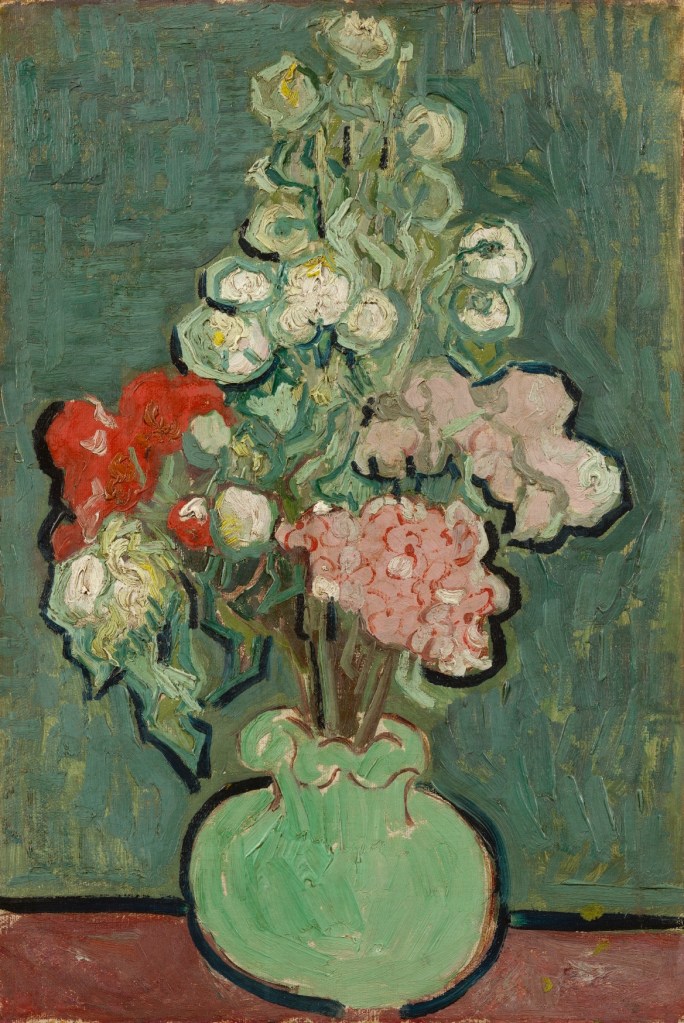
His stilllifes of bouquets and flowers are all marked by bold and striking strokes and at times unpretentious arrangements of wild flowers. He introduced a square format into his portraits which were executed with tone-on-tone color schemes. Views of fields of cereals, cabbage, potatoes and even vineyards in full season are bereft of farm workers and seemingly flow into long expanses of sky. Some of the works are in the « double square » format and the show brings together 11 of these works for the very first time. These panoramic-like double squares include his last three paintings as if he was on the precipice of a new type of painting. Documents, explanatory notes and a program of films, concerts, lectures and conferences are all part of the Van Gogh agenda while an interactive and virtual reality experience brings Van Gogh’s palette to life. The Musée d’Orsay, housed in a former mainline railway station, presents Western art from 1848 until 1914 including a host of masterpieces. The Van Gogh exhibition is on until February 4th, reservations are highly recommended. ©Trish Valicenti for The Gourmet Gazette. Musée d’Orsay, Esplanade Valéry Giscard d’Estaing 75007 Paris, +33 (0)1 40 49 48 14. https://www.musee-orsay.fr/en
See also: https://thegourmetgazette.com/2023/12/10/very-van-gogh/
Discover more from The Gourmet Gazette
Subscribe to get the latest posts sent to your email.
Categories: Gourmet Fair
 The Gourmet Gazette
1 reply »