
Paris, France — It is an exuberant exhibition that is unfolding at the Musée du Quai Branly-Jacques Chirac with colorful costumes, Indian artworks rooted in that country’s rich mythology and history and movies, buoyant fun-filled, at times dramatic or melodramatic movies. The movies of Bollywood and before display how India’s cinematic tradition is rich and dates back to the end of the 19th century when Indian viewers discovered moving images in 1896, just one year after the first projections were undertaken by the Lumière brothers in Paris. Throughout the 20th century India quickly invented its own cinema. The exhibition, entitled Bollywood Superstars, a Short Story of Indian Cinema brings together over 200 works including paintings, shadow figures, costumes, photographs and film sequences, all illustrating the popular arts, stories and artistic influences that have given rise to the dazzling universe that is Indian cinema.
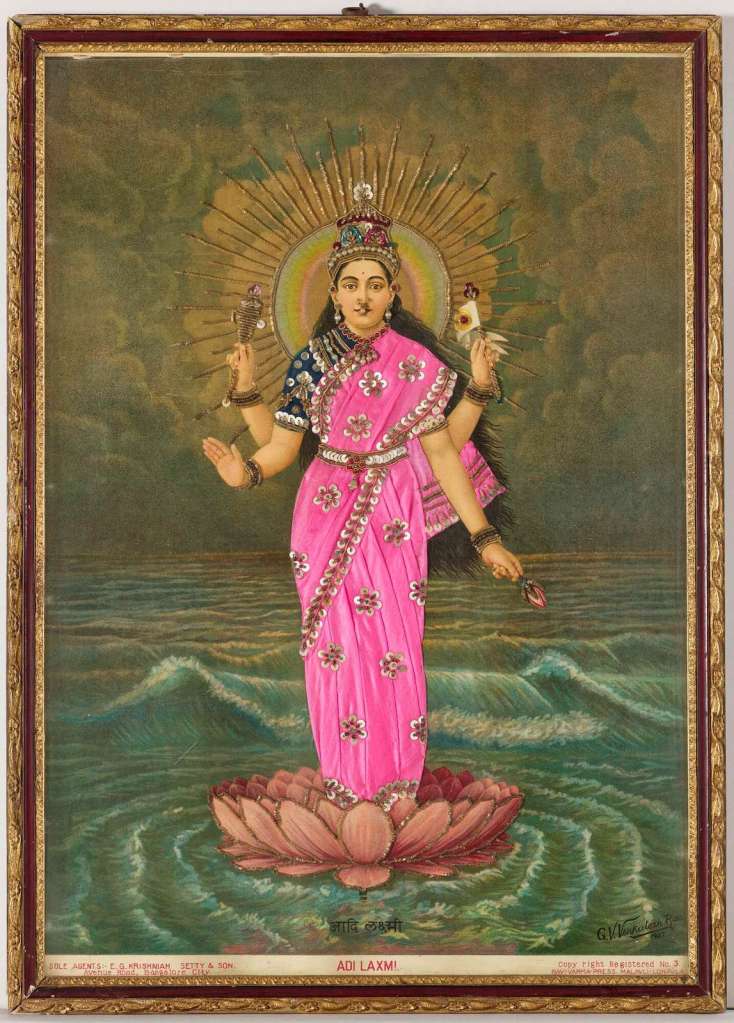
With over 1,500 films a year exported to every continent, India is today the world’s leading film producer. The Bollywood Superstars exhibition looks back at more than a century of Indian cinema, from its mythological and artistic roots to the icons of the modern-day “star system”. The exhibition also looks at the popular narrative arts that preceded cinema and still today co-exist with it: storytelling, shadow theater and magic lantern shows.

Following in the tradition of travelling storytellers, shadow plays and magic lantern shows, the first films were inspired by mythological stories dating back over 2,000 years, and were shown from village to village in mobile theaters. Cinema became a new device for bringing the gods out of the temples and closer to the faithful. It was also a way of exchanging glances with living divine images, with all the religious importance that sight (darshan) holds in Indian civilization. Two timeless genres dominate the exhibition, the Gods and princes, sure to make for blockbuster films. A spectacular array of historical objects, including court dresses, openwork palace screens, ceremonial armor and jade set with precious stones accompanies the show.
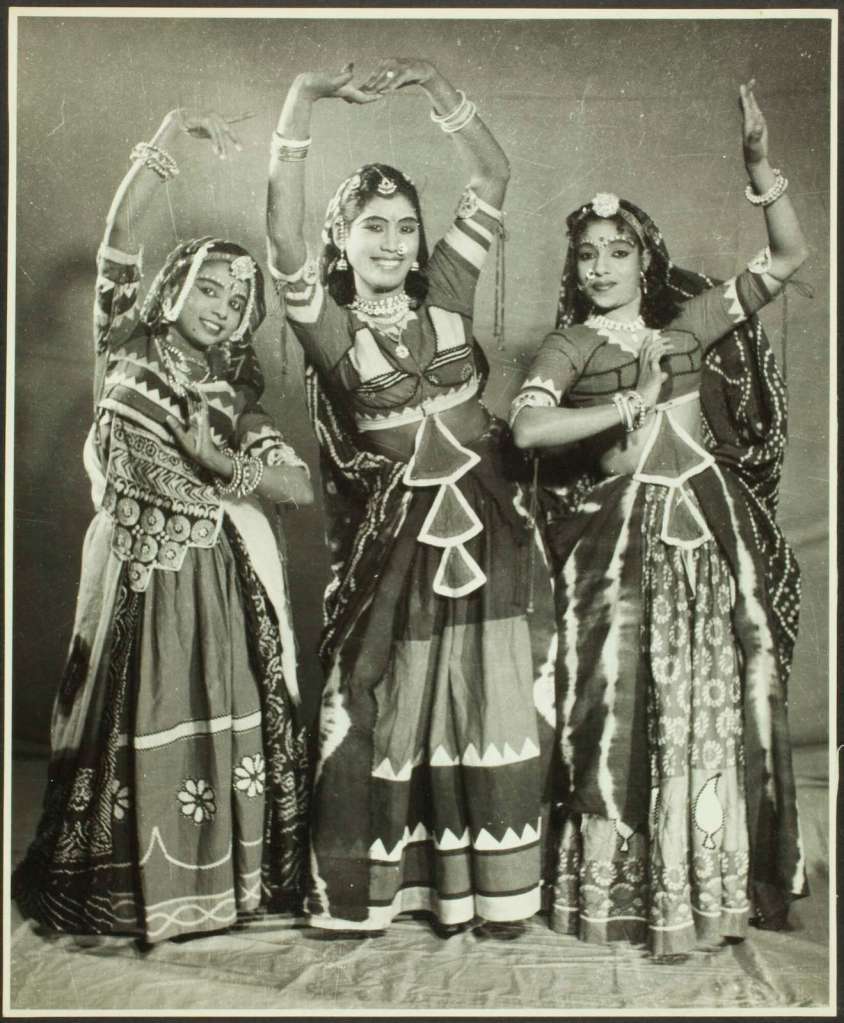
The last part of the exhibition opens with the 1970s and the “single screen” cinema, which developed in the wake of the first major Bollywood blockbusters.The 1975 Sholay from Ramesh Sippy, a timeless classic, elevated cult actor Amitabh Bachchan to the top in one of the first “masala” films. Like a masala spice blend, the film combines genres to offer a complete and intense set of emotions. But it is predominantly the performers, who are adored by the public, who make films successful in India. The fervor for the star system and its actors and actresses is unique. Whether established or rising, popular stars have the ability to move the viewer with a simple word, gesture or look. An installation of giant screens pays tribute to some of the biggest stars with a selection of iconic scenes paying tribute to the actors who have lived through the decades through a selection of cult scenes from the 1970s to 2010. Meanwhile the exhibition is accompanied by a rich program of music, dance, cinema and theatre. And even a puppet show from Rajasthan. Exhibition and cultural program until January 14th. https://www.quaibranly.fr/en/ ©Trish Valicenti for The Gourmet Gazette.

Discover more from The Gourmet Gazette
Subscribe to get the latest posts sent to your email.
Categories: Gourmet Fair
 The Gourmet Gazette