
Paris, France — Art is recognized as a form of therapy, often playing a role in hospital wards or retirement homes. But just going to a museum to see art work provides an escape into other worlds. And an exhibition being played out in Paris devoted to the three great traditional medicines of Asia —Indian, Tibetan and Chinese – is an even more pertinent example. For the show, underway at the Musée national des arts asiatiques – Guimet (The National Asian Arts Museum) goes into great detail about these medical practices through art works, objects and extensive explanations offering a journey into wellbeing. It is a first for the museum and it offers a solid look into the holistic or global approach of these medical practices towards illnesses as well as the role of how energy circulates through the body and the effect that the divine and the demon can have on one’s physical and mental health. « To visit an exhibition and to devote oneself entirely to contemplating art works, isn’t that a form of therapy? » commented Yannick Lintz, the president of the Guimet Museum.

Asian medicine is becoming increasingly popular in the West today as well. The exhibition entitled Asian Medicine, the Art of Balance, stuns by the beauty of the art works and objets on display as well as the actual objects used in traditional Asian medical practices. Traditional Indian medicine is known as Ayurveda which in Sanskrit literally means knowing how to prolong life. Tibetan medicine, called sowa rigpa, meaning the science of treatments, involves training in medicine and spirituality as well. The traditional medicine of the Far East — Japan, Korea and China — revolves around the Life Force and traditional doctors excel at prevention.
Divinités play a key role both spiritually and physically. The Hindu goddess Mariyammai is thought to protect against small pox. The Buddhist goddess Hariti is venerated as protector of children and in Taoism it is the Jade Lady of Taishan mountain who protects and nourishes newborns. But Buddhism has a number of gods and goddesses associated with healing as well as bodhisattvas (enlightened beings). Little is known about the ancient centers of healing in Asia however the medieval hospitals of Cambodia at the height of its Angkor period under the reign of the Buddhist king Jayavarman VII (circa 1181-1220) were well documented. Spread out throughout the territory, they were accessible to the entire population. The wooden structures did not survive into the present day but the chapels, made of stone, associated with them have.

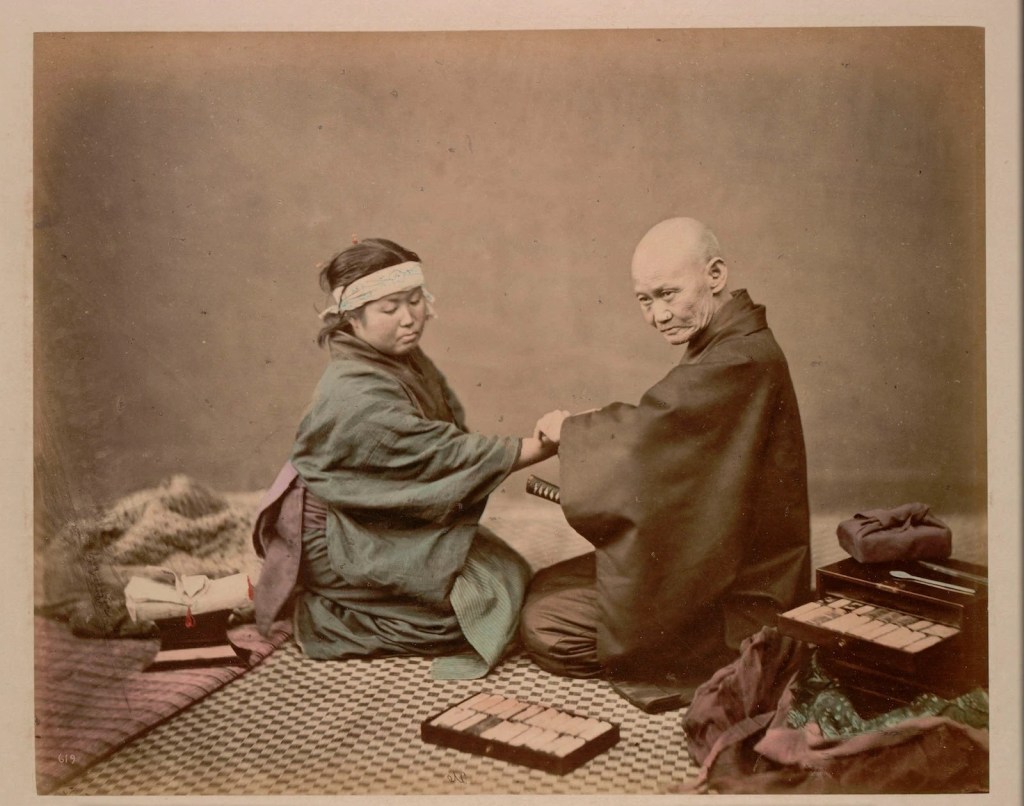
Treatment in traditional Asian medicine revolves around three principles, the diagnostic (fundamental), therapeutical treatments and a holistic or global approach not unlike good general practitioners in the West. Pulse taking plays a key role especially in Chinese and Tibetan medicine. Treatments include acupuncture, moxibustion, a kind of enhanced acupuncture which involves heat and a special herb, mugwort, and slow burning close to the skin’s surface on the point selected by the physician, and plant-based medicines. Massage, exercise, yoga and meditation are often prescribed as well. Myriad plants are used in traditional Asian medicine and the exhibition includes an excellent display of herbs and plants. Shamanism, astrology and exorcism are not left out of the healing equation either. Amulets, talismans and protective clothing, garments covered in magical diagrams and magical formulas, clearly more aesthetic and culturally interesting than paper masks and rubber gloves, are on display as well.
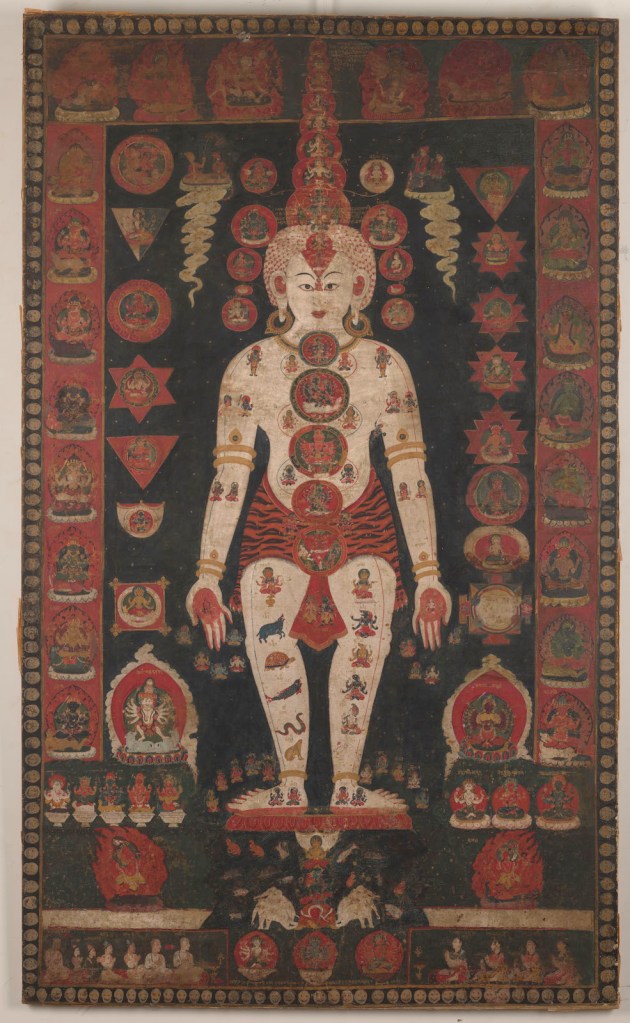
The show brings together some 250 works, many on loan from prestigious institutions including the British Museum, the Victoria & Albert Museum, the musée du Quai Branly and la Bibliothèque nationale de France (France’s national library). A rich program of guided tours, conferences, concerts and workshops for adults, children and families are all on the agenda. The Guimet houses one of the most important collections of Asian art in the world. The temporary exhibition on traditional Asian medicine is on until September 18th. ©Trish Valicenti for The Gourmet Gazette. https://www.guimet.fr/
See also: https://thegourmetgazette.com/2023/07/21/the-delight-of-blues-and-white/
Discover more from The Gourmet Gazette
Subscribe to get the latest posts sent to your email.
Categories: Everything Gourmet, Gourmet Fair
 The Gourmet Gazette
1 reply »